
Wednesday, February 27, 2013
Fate Core Synthesis Draft


Tuesday, February 26, 2013
Dixton Extra: Sigils
Saturday, February 23, 2013
Daryl Dixon Has More Than Stuff. Things.
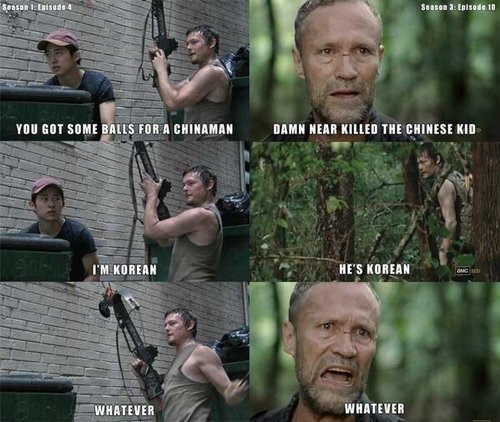
The Walking Dead this season and last delivered an extremely pleasant surprise in the character development department: Daryl Dixon. Norman Reedus has been handed a character who could have been a South Park or Simpsons style cardboard cutout and given him depth, wisdom, compassion and overall badassery.
Daryl serves as the perfect foil for Merle, both of whom came from the same background (which itself could have been done in a cliche manner, but was not) and the exchange between them in Zombie Delivery was a perfect example. Daryl has grown as a person in a believable manner without giving up the charm that makes him Daryl.
Daryl follows in the footsteps of Tyrion Lannister from Game of Thrones, a character who has distasteful qualities but shows more than enough depth to be the most sympathetic character in the show (at least to me). Tyrion was already my favorite from the books, but Peter Dinklage brings so much to the table in bringing him to life. Not that Daryl shares Tyrion's depravities, just in both cases the characterization could easily fall into cardboard cutout territory and by virtue of impressive acting steers well clear of it.
Daryl does illustrate a particular prejudice on my part - surprise that a character who might be considered a "hick" or "redneck" would be likable or deep. I'm not particularly proud of this realization, and it goes a long way toward realizing Daryl's likability isn't in spite of his background or because of it, but due to coming across as a thinking, feeling, complete person. The actor successfully turns the mirror of "the other" back on us, showing that even the most open-minded view some people with the same prejudice they criticize others for. That's the real magic in Daryl Dixon.
Plus they'd all die without him around.
Friday, February 22, 2013
Flashback Friday: Living Steel
I'm going to start a feature of sorts revisiting a few older and possibly even a little obscure settings or game systems. Not reviews but more of personal recountings of what I genuinely liked about the games without concentrating on the negatives.
I have a soft spot for post-apocalyptic games, movies and books. I think this goes back to living for the first half of my life under threat of nuclear war (probabilistic or not). I entered elementary school at the tail end of when they were retiring the old civil defense movies. By that time, they'd abandoned the "Duck and cover"-type videos of the 1950s and moved on to, "When you hear a siren, just find someplace to sit down and wet yourself." Watching The Day After and Threads didn't help matters much. There's nothing like realizing, "I live in California. We don't have cellars or basements." Living close to a number of key military bases may not instill the same nervousness as having a Minuteman silo in the backyard, but it doesn't help either.
So I gravitated towards games like Ogre/G.E.V./Battlesuit, The Morrow Project, Gamma World, After the Bomb for TMNT and Twilight 2000. I also love war machines and mecha. Combine the post-apocalypse with powered armor and I'm set.
Which leads me to this week's flashback: Living Steel. I first discovered it at a convention, where the folks from Leading Edge Games were running a demo. The guys running it made it look downright easy. Little did I know they were actual rocket scientists. I bought the entire line, using my game purchasing budget (and probably part of my food budget too), and spent the next few weeks trying to figure out the mechanics. We tried to play it once and only once, and then gave up for a Mekton game. I don't remember a whole lot about the game system except it was extremely complicated. Regardless, I want to go over the cool bits in the setting and not the system.
One thing I remember about the demo is we were part of some scouting party and located a village or town. Having a heavily armed and armored group roll up to their settlement made the locals understandably nervous; since my character was the leader I was volunteered to talk to them. One of the features of the powered armor is the ability to project an image of the wearer's face, apparently to make the armor more personable. I successfully reprogrammed mine to display a whopping yellow happy face. The discussion went south when one of the locals decided to attack me. I wound up picking him up and trying to explain we were there to help, all the while with that giant happy face on my visor.
If memory serves me right, in Living Steel there was an interstellar society which was defeated by a one-two punch. The Seven Worlds were defeated by an evil empire, but had placed a number of genetically modified supersoldiers in stasis to be awakened when the timing was right. One of the planets they were placed was Rhand, which was (if I remember correctly) a resort or vacation planet of some kind. When Rhand is attacked by a race called the Spectrals, the soldiers (i.e., the PCs) are awakened.
The Spectrals themselves were fairly interesting. They had a warrior type, which was bipedal and kind of Alien-looking. It was exceptionally strong, could see through walls, and was able to incorporate weapons and technology into itself. There was also a spider-looking "brain" type that had psychic powers. They have a hive mind and had some other servitor races they brought along for the ride.
The Spectrals attacked by taking out orbital assets (such as communications) and then spreading a virus planet side called VISR. VISR stood for "Virally Induced Sociopathic Response". Once the population had been reduced to a bunch of Mad Max-style ax murderers and society utterly broke down, they finished their invasion. It would have worked too if it weren't for those meddling Seven Worlders and their powered armor. The invasion not only devastated civilization on Rhand but triggered whatever condition necessary for the release of the super soldiers. They were woken up from their stasis, paired up with some civilian scientists, engineers, etc. who were also in stasis, and set about trying to fight off the Spectrals and reestablish their civilization.

One of the other features of the setting was a teleporter satellite network, called ORCA. The satellite allowed instant transportation from one point on the planet to the other. All but one ORCA satellite was destroyed, and the remaining one damaged. This translated to the satellite only being able to teleport teams once a day or so, and if I remember right the teleportation could be somewhat erratic and imprecise. It was still a reasonably good advantage to have over the opposition.
I also loved the cheesy quotes sprinkled throughout the books' margins. I still remember some choice ones:
Blam. Blam. "Stop." Blam. Blam. "Police."
"We would have believed it was an accidental shooting if he hadn't changed magazines...twice."
Overall, it was kind of a neat setting saddled with a terribly clunky system. I'd actually like to revisit it at some point, because I'm certain it would make a great game using Mekton, Silhouette or even a FATE-based game.
I have a soft spot for post-apocalyptic games, movies and books. I think this goes back to living for the first half of my life under threat of nuclear war (probabilistic or not). I entered elementary school at the tail end of when they were retiring the old civil defense movies. By that time, they'd abandoned the "Duck and cover"-type videos of the 1950s and moved on to, "When you hear a siren, just find someplace to sit down and wet yourself." Watching The Day After and Threads didn't help matters much. There's nothing like realizing, "I live in California. We don't have cellars or basements." Living close to a number of key military bases may not instill the same nervousness as having a Minuteman silo in the backyard, but it doesn't help either.
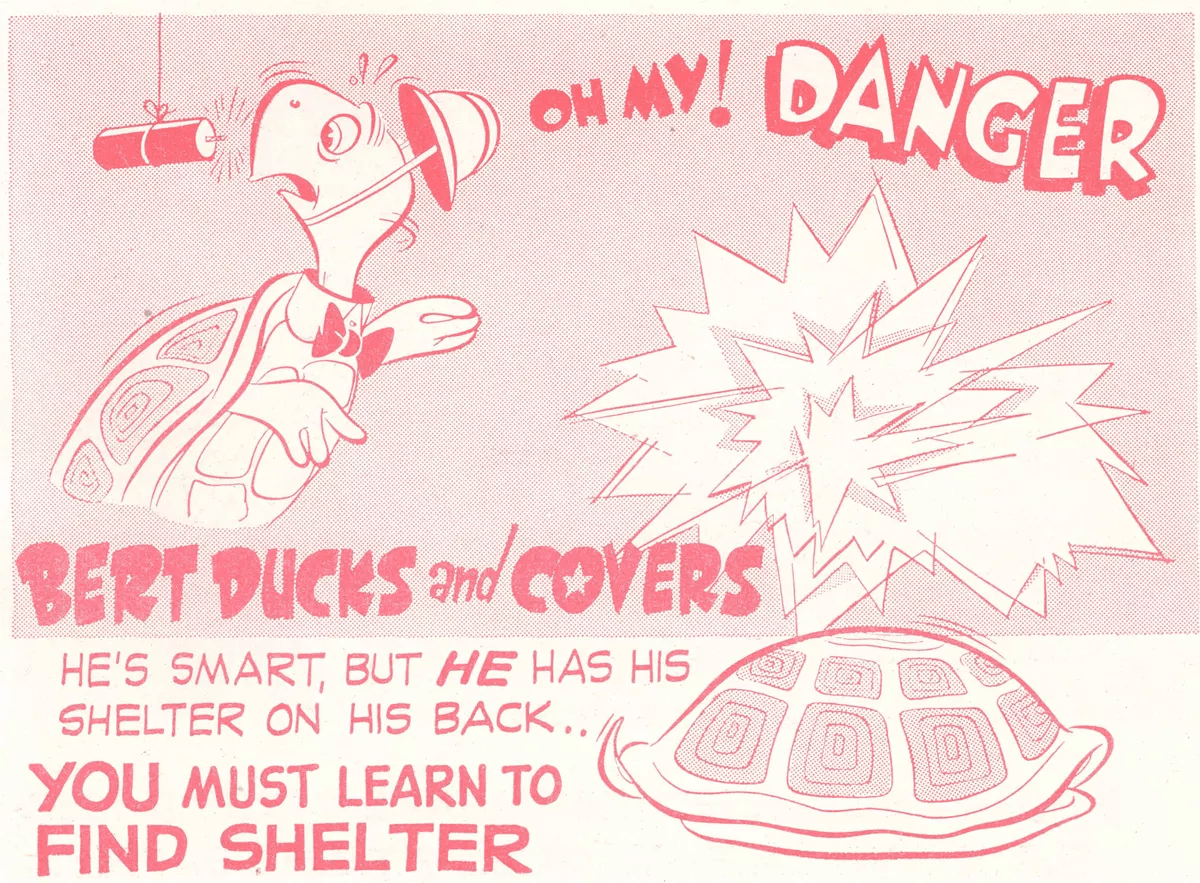 |
| It worked out well for those people in Threads. |
So I gravitated towards games like Ogre/G.E.V./Battlesuit, The Morrow Project, Gamma World, After the Bomb for TMNT and Twilight 2000. I also love war machines and mecha. Combine the post-apocalypse with powered armor and I'm set.
Which leads me to this week's flashback: Living Steel. I first discovered it at a convention, where the folks from Leading Edge Games were running a demo. The guys running it made it look downright easy. Little did I know they were actual rocket scientists. I bought the entire line, using my game purchasing budget (and probably part of my food budget too), and spent the next few weeks trying to figure out the mechanics. We tried to play it once and only once, and then gave up for a Mekton game. I don't remember a whole lot about the game system except it was extremely complicated. Regardless, I want to go over the cool bits in the setting and not the system.
One thing I remember about the demo is we were part of some scouting party and located a village or town. Having a heavily armed and armored group roll up to their settlement made the locals understandably nervous; since my character was the leader I was volunteered to talk to them. One of the features of the powered armor is the ability to project an image of the wearer's face, apparently to make the armor more personable. I successfully reprogrammed mine to display a whopping yellow happy face. The discussion went south when one of the locals decided to attack me. I wound up picking him up and trying to explain we were there to help, all the while with that giant happy face on my visor.
 |
| Is it me, or does he look like he might have a little problem with gas? |
If memory serves me right, in Living Steel there was an interstellar society which was defeated by a one-two punch. The Seven Worlds were defeated by an evil empire, but had placed a number of genetically modified supersoldiers in stasis to be awakened when the timing was right. One of the planets they were placed was Rhand, which was (if I remember correctly) a resort or vacation planet of some kind. When Rhand is attacked by a race called the Spectrals, the soldiers (i.e., the PCs) are awakened.
The Spectrals themselves were fairly interesting. They had a warrior type, which was bipedal and kind of Alien-looking. It was exceptionally strong, could see through walls, and was able to incorporate weapons and technology into itself. There was also a spider-looking "brain" type that had psychic powers. They have a hive mind and had some other servitor races they brought along for the ride.
The Spectrals attacked by taking out orbital assets (such as communications) and then spreading a virus planet side called VISR. VISR stood for "Virally Induced Sociopathic Response". Once the population had been reduced to a bunch of Mad Max-style ax murderers and society utterly broke down, they finished their invasion. It would have worked too if it weren't for those meddling Seven Worlders and their powered armor. The invasion not only devastated civilization on Rhand but triggered whatever condition necessary for the release of the super soldiers. They were woken up from their stasis, paired up with some civilian scientists, engineers, etc. who were also in stasis, and set about trying to fight off the Spectrals and reestablish their civilization.

I also loved the cheesy quotes sprinkled throughout the books' margins. I still remember some choice ones:
Blam. Blam. "Stop." Blam. Blam. "Police."
"We would have believed it was an accidental shooting if he hadn't changed magazines...twice."
Overall, it was kind of a neat setting saddled with a terribly clunky system. I'd actually like to revisit it at some point, because I'm certain it would make a great game using Mekton, Silhouette or even a FATE-based game.
Thursday, February 21, 2013
Sins of the Sister, Part 5
Previously...
Sins of the Sister, Part 1
Sins of the Sister, Part 2
Sins of the Sister, Part 3
Sins of the Sister, Part 4
The path leading from Bazaar up the Great Hill was all that remained of an ancient roadway, long since broken up and overgrown. Only isolated patches of blacktop and a few large ancient buildings resisting collapse were reminders of the World Before. By the time we entered the woods surrounding the base of the hill the sun had burned through the morning fog and we could see the dome of Mortuary above the trees. The forest seemed peaceful, but Kileg scouted ahead and behind us for any danger.
"I have the sword that killed Nyeda," I said to Den'a, bringing my horse alongside the wagon. "I didn't know if it would be useful to you."
"It will." Her voice was soft and childlike.
I studied her for a moment. "You are very young for being in one of the Sisterhoods."
"Not all of us are old hags." She smiled, the barest upturn of her mouth.
"I did not mean offense. I thought Yagan arts need many years of study."
"For some, yes. For others, it is more nature than study." Her eyes met mine. They were a peculiar dark blue, almost violet. "Just as I'm sure there are some who take better to killing than others."
"What are you going to do with the boy? Is he sick?"
"I will find the nature of his sin and purify him. You will have the truth about your murdered comrade and Joan will have justice."
"Purify? I thought only Marians could do that..."
"It's not polite to invoke a dead Fatima, Templar." Her eyes glittered. "Sin has deep roots, and mere absolution is not enough for true purity."
"So, why him? Why do you need me?"
"There is a lot I cannot tell you, Cara Gray'on. I am simply a servant of Baba Yaga and follow the instruction of my elders. As for you, the Grave Fields can be dangerous and I require a protector while I work. Guy Nostra'on did not seem happy with your actions yesterday. I believe he is punishing you."
I nodded and thanked her for her honesty. Kileg had returned and motioned for me to join him, so I excused myself and guided my horse to his. He told me the way was clear except for Joanite hunters tracking some Squats who had headed into the Hunting Paths. I related my conversation with Den'a and the dream I had the night before, confessing my concerns about the situation. Kileg was silent for a long while, his eyes constantly searching the edge of the path ahead as he considered what I had said. Finally he asked to see the sword, examining it closely while he guided his horse with his knees.
"I think this metal is from a fallen star," He said finally.
"The Falling Plagues? Why do you say that?"
"I have seen one other blade like this, and was told it had been forged from a fallen star. It was a Joshuan blade. I took it off of a Squat, who claimed another Squat had killed an old Joshuan Outrunner and stolen it. I didn't believe her, thought it was some old metal someone had banged into a sword shape, but when I returned to Vimary I was ordered to bring it to Joan's Tower and never saw it again."
"Who did you give it to?"
"Nostra Guy'on." Kileg lowered his voice. "These swords are rare. Not something a boy would find in a plowed field. You're right Cara, and this blade may hold part of the answer. Forgive me, but Nostra Guy'on is a snake. I'm not even sure he fought during the Liberation, as much as he runs away from it now. He'd let the Z'bri walk right into Joan's Tower if he thought it would make him look good."
I looked back at the wagon. Den'a was sitting with her face slightly upturned toward the dappled sunlight while the young girl was concentrating on driving the wagon. The two boys sat on either side of Robbo, who was sitting perfectly still staring into space. One of the boys was sharpening his knife while the second started at his feet.
"Please watch what you say." My voice was barely above a whisper. "You can't tell who or what might be listening, even here."
"Joan hardly speaks to anyone. She did to you for a reason. Just remember that." He handed the cloth bundle containing the sword back to me. I shook my head, in confusion more than disbelief. There were too many missing pieces, and the pieces I did have didn't make any sense. The Sin Eater, and whatever she was going to do, seemed like the only hope I had.
The crumbling dome at the top of the Great Hill loomed large ahead of us as we followed the meandering trail until it turned us toward the Grave Fields. Branches intertwined over our heads, the way ahead becoming a tunnel through the trees and underbrush. The familiar sounds of the forest, the clop of horses' hooves and clatter of wagon wheels became muted in the soft carpet of leaves. The girl driving the wagon hunkered down, gripping the reins tighter, and the boys jumped at every cracking branch or rustle in the brush. Kileg strung his bow and rested it on the saddle in front of him, muttering to himself as his eyes swept the way in front of us.
Near midday the tunnel began to widen until the trees, patches of blacktop and occasional crumbling wall or rusted hulk of a metal chariot gave way to a rolling plain dotted with gnarled copses, broken stone slabs and small buildings. Columns and sculptures were scattered randomly about, leaning haphazardly or half-buried on their sides. The sky was a vast expanse of gray punctuated by the stark silhouettes of giant ravens wheeling overhead.
The lurching and jolting of the wagon on the rough ground threatened to throw the boys and Robbo from the back, so the girl was forced to stop. Den'a clambered down and proclaimed we would have to continue on foot. It was the first she had spoken since earlier in the morning.
"What about the horses?" Kileg asked.
"We'll need to leave one of those three behind. One that I trust," I replied. I motioned to the girl. "You'll need to stay with the horses. Tie these two to the wagon. If anything happens, take the wagon and the horses back to Mortuary and get word to the Watchtower." She nodded, trying her best to look brave. "We'll be back as soon as we're finished, I'm sure you will do fine. You two, get Robbo out of the wagon. Carefully."
We all walked a short distance then Den'a stopped just out of sight of the wagon. She produced a small bowl and some long strips of linen from a bag. "You do not want to attract unwanted attention," she said, placing the bowl on a nearby rock and mixing a small amount of thick paste. "If you would allow me, I will need to mark you."
Kileg hesitantly agreed and I nodded. She took a small amount of the paste on two fingers and smeared some on all of our foreheads and cheeks, even Robbo, then instructed for us to wrap the linen around our heads. It was muslin, much like her own covering, but like gauze. It could be seen and breathed through easily enough. She then marked herself and wrapped her own fabric around her head. We continued onward into the Grave Fields on foot with Den'a in the lead.
Descending into the Grave Fields we found ourselves in a labyrinth of mausoleums, crypts, stone, stunted trees and mist. Many of the entrances to the mausoleums and crypts were closed, either by rotting iron gates or more recent, crudely constructed barriers. The pitch black openings all descended into the earth. Pennants and skins hung from many of the crypts, and I saw many markings I recognized - Tribal symbols, family names, clan sigils - and some that were altogether foreign to me. The structures seemed much taller than when we emerged from the forest. I chanced a look back once and found a totally different landscape than the one we had traveled through moments before. Aside from the ravens, we saw no other living thing.
After a couple hours of following Den'a through the fields, picking our way carefully through the rock and brush, our group came upon a small hill dotted with sickly trees. A slightly worn trail led up to an opening near the crown of the hill, framed by three rough stone slabs decorated with brightly painted patterns and charcoal drawn symbols. Poles bearing dried human skins stood to either side of the entrance.
"Looks like the right place," Kileg said quietly.
"I will continue with Robbo from here," Den'a turned to face me. "I will need you to wait, but you cannot accompany me for the ritual."
"You can't be expected to handle him by yourself," I answered skeptically.
"I will not be, the boys will accompany me. They witnessed the incident, I need them as well."
"W-we didn't actually see..." one of them interjected.
"You have a part in this," she said. Her voice held an edge I had not heard before.
"And my part?" I asked.
"The ritual I must perform is very delicate, and I cannot be interrupted. I will need you to insure I am not. It is going to be dark soon, and I have preparations to make. I will call for you when I am ready." Den'a walked up the hill and disappeared inside the shadow of the entrance, carrying the sword and a number of bags she had brought with her in the wagon. A moment later a torch guttered to life just inside the entrance, throwing a dim glow against the walls. She disappeared down the passageway and did not return until it was almost dusk.
As Den'a exited the tomb Robbo began to mutter to himself, shaking his head back and forth and swaying on his feet. He had not made a sound the entire morning or afternoon. The linen over his face puffed in and out, sucked in against his mouth as he struggled to form words. I could not see the two boys' faces, but they gripped the poles attached to Robbo's collar so tightly their knuckles were white. Den'a walked up to Robbo, taking his hands into hers, and he immediately calmed down.. She tugged gently on his hands - he hesitated at first then began to follow her up the hill, the youths loosely holding the poles behind them.
Some instinct told me to draw me sword, and I did so with Kileg following suit. There the two of us stood, silently watching as darkness fell across the vast necropolis of the Grave Fields.
Tuesday, February 19, 2013
Fighting "Aspect Creep"
- Agnite: Child
- Baba Yaga: Crone
- Dahlian: Trickster
- Evan: Mother
- Joan: Warrior
- Magdalen: Lover
- Tera Sheba: Judge
- Doomsayer: Prophet
- Herite: Heretic
- Jacker: Avenger
- Lightbringer: Visionary
Saturday, February 16, 2013
Sneaky Skills for a Sneaky Time
After some thinking and reworking, I'm kind of settled on the skills for the Dixton setting for Fate Core. I'm hoping it's varied enough to capture the nuances of what a master thief-type character does, such as the splitting of underworld and legitimate contacts and resources, the use of a Case skill as a counterpoint to Investigation, breaking out Pilfering and Breaking from a general Burglary skill, etc. Alertness is just Notice renamed, and the same with Sneak and Stealth. The stunt list is definitely not comprehensive, and obviously doesn't include any kind of magic or powers system - which is where I'm setting my crosshairs next. Anyway, you can download the draft skills document and take a look for yourself.
Friday, February 15, 2013
The Death of a Game Store

Wednesday, February 13, 2013
Sins of the Sister, Part 4
I shouldn't have been surprised at the news Kileg was involved, given the dream, but I was. I found him in the courtyard with Den'a and the three young Joanites. Kileg was in hunter's leather and a wolf's pelt cloak, his unstrung bow in a scabbard on his back and a solid, wide blade at his belt. Den'a was covered in her shroud, and the Joanites had been outfitted as acolytes. There were also two saddled horses and a hitched wagon.
"I was not expecting you to be here. I dreamed about you last night."
"I hope it was a good one?" Kileg winked, grinning wide underneath his bushy beard as we grasped forearms in greeting. "Old Nostra came to me last night and asked I accompany you as far as the edge of Mortuary. Says nobody is supposed to know, not even you until this morning." He glanced at Den'a. "This one says there will be no danger. Don't know about you, but there's more to this, so I think I'll stay with you until it's all over."
"I dreamed of No Man's Land, and Selia..."
"That definitely is not a good one. Any idea what it means?"
"I don't know...I'm hoping whatever it is we're doing will reveal it to us."
"Also, I'm also not sure where you go these three from." Kileg grimaced at the three youths. "I'm afraid they won't be much good in a fight, unless it's against ancient Squat women. Still might be too much for them."
I looked the three Joanites from the previous morning over. They each wore a smock bearing family and clan symbols over leather jerkins and had been given austere but serviceable short swords. The girl looked anxious and excited, but one of the boys was sullen. He had a fresh bruise over one eye and a cut on his face. I looked at Kileg, who shrugged nonchalantly.
"Keep an eye on that one, I think," Kileg said. "He was thinking he's the boss of the other two earlier, trying to stir something up."
I pointed to the girl. "You, I need to drive the wagon. The two of you will be with the prisoner. You don't take your eyes off him for a second, and the moment he so much as twitches wrong you yell at the top of your lungs and get out of the wagon. Nobody talks to him, taunts him, touches him." I looked at the second boy, motioning to the one with the bruises. "You, if that one gets mouthy, stab him. This is your chance for redemption in Joan's eyes. Do you understand?" All three of them nodded.
"It's just like the old days, no?" I said to Kileg.
"Not really," he replied gruffly. "Very curious how you got mixed up in all of this. Too bad about Nyeda..."
"When we're done with this, we definitely need to catch up." By that time, the jailer and guards had come up from the cells, bringing a shackled Robbo with them. He was in ill-fitting but fairly clean clothes, and had been scrubbed such that his skin looked a little raw. Bandages covered his hands and the worst of the cuts and burns on his face salved. He did not look up or make any noise as they got him into the wagon and chained his shackles to iron rings set in the wagon. The two boys clambered up after him. Kileg helped Den'a onto the bench next to the girl, who had taken the reins.
"Let's get this over with," I said as I swung into my saddle.
Monday, February 11, 2013
Work-Life-Game Balance
Like a lot of middle-aged gamers, that spot in the "middle" has left me adrift when it comes to gaming. For the last decade or so career, family life and other daily demands have pretty much removed me from doing much active gaming. I'm able to find time to read about games, or write about them, but that's because it can be done in the spaces between one project or the next, or downtime at home, with no set schedule.
This situation sucks because it seems we've hit the Promised Land of tabletop role playing. Gaming is finally starting to catch up with technology, moving beyond basic online communities and discussion forums to the point where it can actually benefit the gaming experience actively around the table. On top of that, there's been an explosion of impressive games.
Personally, it seems impossible to be able to fit any face-to-face gaming experience in. I have a career, as does my girlfriend - but she puts in much longer hours than I do, including weekends. Both of us have a child, one six and the other seven, so that means we're dealing with double the amount of activities, school work, and other concerns that come along with their age. I'm typically responsible for getting the kids to school, picking them, getting dinner, doing homework, giving baths, and keeping them entertained on the weekends (they have no interest in role playing, at least yet, and neither does my girlfriend). Throw in housework, weekend activities, trips, family birthdays and visits...there certainly doesn't seem to be any time at all to fit a good game in. Trying to get together three or four people with the same situation for a few hours each week makes it impossible.
There are a number of options for trying to get some gaming in, each with their own concerns and pitfalls. Play-by-email and play-by-post are the least time-restrictive. It works for some people but not for me because I quite like having a group of people around when I play. The newest option - Google+ Hangouts - seems to be a good compromise. You get to see the other people's faces and hear their voice, as well as leverage tools like Tabletop Forge/Roll20 to help the game along. It does still have the limitation of finding the block of time and the environment to be able to make it work, but given that a lot of my gaming-related activity occurs after everyone goes to bed a couple of hours of later-night gaming a week might be feasible.
For me, work may be the way to go. There are a number of gamers that work here (not surprising, being a software development shop). Word around the cubicles is someone was given implicit permission to use a conference room for after hours weekend gaming. It might also be possible to set up weekly lunch-hour games. We could order in for lunch and get together for an hour or so. We would have access to the projector in the conference room, plenty of room, and we'd remain relatively undisturbed. We'd also have some flexibility as to the day of the game, in case someone takes a day off - not to mention, we're all here anyway. For some lighter games such as Fate Core, this might work. For D&D or Exalted an hour might not be enough time to gain any traction.
Short of waiting until I retire, I think that work gaming might be the only way to go.
Saturday, February 9, 2013
Rusted Sky - Fate Core Tribe 8
Joshua the Ravager: Force, Magnum
Wednesday, February 6, 2013
Building a sneaky game
So, I have a basic outline of a city for a Thief/Dishonored style game. It has - or at least I hope it has - the elements a game like this needs. Slightly more advanced than the Renaissance; no multitudes of non-human races; a mysterious ancient civilization for some mystery and to provide an excuse for artifacts/rare treasures/forbidden magic; and lots of dark, cramped alleyways, rooftops, waterways and underground tunnels. The next step is figuring out what a game like this needs in order to work.
There are roughly four groups of actions characters in these games take: sneaking around, taking down opponents, overcoming obstacles or puzzles, and stealing things. This applies even to modern or near-future games like Deus Ex: Human Revolution or Alpha Protocol. For the opposition, there are typically only two types of actions they take: looking for thieves and trying to kill them.
With that in mind, I can flesh out a rudimentary list of various abilities. They're intended to be their own skills, instead of stunts for existing skills. Some things that aren't on this list like Physique or Will may still be available when needed, but they aren't a key focus in this genre. Even so, a general skill like Investigation shouldn't be allowed to overshadow Case, which is intended on being a narrower, more focused skill so that it can concentrate on what's important to the genre. I'll detail each of these with overcomes, advantages, attack and defense later (with some possible additions and changes).
- Alertness - A measure of knowing what is going on around you. This is not much different than the existing Notice skill. Guards typically have this skill, which they use to blow your stealth.
- Breaking - This is the ability used for picking locks, opening safes, figuring out how to manipulate doors, hatches, gates, etc.
- Cant - This is a measure of the character's reputation and connections within the criminal underworld. It can be used to get information on potential missions, find employment, obtain equipment, or locate other less-than-lawful knowledge. It can also be used to communicate with other underworld types without Squares (i.e., normal people) understanding them.
- Case - The ability to find vulnerabilities and items of interest in a location. This includes guard patrol patterns; hidden or little known entries/exits; safe routes; hidden rooms; compartments or safes; valuables "hiding in the open"; etc.
- Deceit - This is identical to the default skill in Fate Core.
- Fence - This is the ability to evaluate the usefulness or value of items. It is also used to locate buyers or sellers. Thieves typically have a rank or two in Fence, but often rely on dedicated individuals.
- Fighting - This is the standard skill from Fate Core. Note that most thieves (and even many assassins) are not particularly good at it. Guards almost always have this skill.
- Pilfer - The ability to take (or place) objects without being noticed.
- Shooting - Another standard Fate Core skill. Some thieves and assassins prefer Shooting to Fighting, so slightly more have some level of it. Guards that don't have Fighting usually have Shooting. The worst ones have both.
- Sneak - The ability to avoid being seen or noticed - basically Stealth from Fate Core.
- Square - A measure of the character's non-criminal contacts, legitimate concerns and resources. It also be used as a measure of how honest or non-suspicious the character can appear.
- Takedown - This skill is used to quietly, and quickly, remove opposition. It is separated from Fighting to allow thieves to be good at taking out opposition but terrible fighters.
- Tracing - Also called parkour or freerunning, this is a particularly specialized form of Athletics dedicated to overcoming and navigating obstacles. This may not stay as a separate skill, but instead become an Athletics stunt (there is a good argument that the ability to do parkour means being generally athletic).
Player Characters
Obviously, in a game like this thieves don't break into manors in groups like a stealthy flash mob (or a flock of crows - you get a brownie if you get the reference). For the most part, this genre is one of solitary characters. There are a number of ways to handle this - having a main character and a supporting character, or have players play different roles within the criminal underworld. Since we're assuming everyone wants to be the dashing Flynn Rider, We'll go another route. Each of the player characters perform their own missions and jobs and meet during downtime to take care of other business and drama. When a player character decides to take on a mission or job, the other players collaborate with the GM to flesh out the details. The other players also assume roles in running opposition against the player. This will require more work later on to determine exactly how the whole thing works.Guards
This is a genre where the opposition are kind of like Barney Fife until they are provoked. They are Fair NPCs, with no stress boxes and one skill (Alertness +1). But once they spot your character or otherwise become sufficiently alerted (like you accidentally blow something up) they become more like Jack Bauer.This is simulated by guards, soldiers, etc. (and only those types of opposition) becoming Good NPCs once a certain threshold has been reached. They become much deadlier and more difficult to deal with at the worst possible time - when you are out in the open and exposed.
If there's a threshold which needs to be reached it's possible to have the player roll a contest consisting of obstacles and if they fail the guards are alerted. This option seems like a cop-out. Once the alarm is raised, there's no good way of figuring out how long it should last or what the consequences are. Consequences are probably the key word there, and where consequences are a possibility a stress track is sure to follow. Side note: Apparently I must be the stress track king, considering how many I use in Strands of Flesh and Spirit. I promise I won't go that far here.
Characters using the Sneak skill have a Stealth Track. This is a standard two-box stress track (there may be skills, stunts or extras that add to this). When a character fails a roll or otherwise does something where they might be caught, they can either take the stress or downgrade and take a consequence. This doesn't add any additional consequence slots, meaning the character is vulnerable in a physical or mental conflict because they have a stealth consequence. This is intentional - having the consequence of "I Found Him!" means more guards are going to be coming down on you and you're one step closer to getting run through (criminal justice in this genre doesn't often involve courts or jail).
Stress clears at the end of the scene, but obviously the consequences linger as per Fate Core. The recovery action required depends entirely on the nature of the consequence. If you have the mild consequence "I Know You're Here Somewhere!" you would just need to take an action to convince the guard that it was nothing, and then rename the consequence to "Damn Rats" or "It Must Have Been the Wind". Once that has been accomplished, it's a matter of not getting caught for the remainder of the scene so you can clear the slot. A moderate consequence might be "Set Off The Alarm", which will have to be disabled or turned off to downgrade to "Stay On Alert". A severe consequence might be "Botched the Bamford Job". Bamford is going to want to find the thief who infiltrated his manor and depending on how things went down or past history you might be a suspect. Contacts may not want you around until it's cleared up; worse, some of your more opportunistic peers might decide to help Bamford out in finding you. Once you run out of Stealth stress boxes, the guards know you're around (if they haven't seen you directly) and at that point go from being Fair to Good. That's when things unquestionably go pear-shaped, and it's probably best to try to get out of there as fast as possible.
Next up, I'll start to flesh out the custom skills.
For a lot of good references on 18th century London thievery, including a dictionary of Thieves Cant, a list of professions, business directory, costs of goods and other neat information head on over to this website.
Finally, I'd like to thank the Fate Core Google+ Community, particularly Jeff Johnston, Jack Gulick, Andy Hague and Andrew Jensen, for their terrific ideas on how to handle stealth.
Being true to yourself
Sunday, February 3, 2013
Paying homage where homage is due
I just realized something that has been entirely missed in this whole Dark Phoenix Publishing trainwreck, and I think it's something important.
White Wolf, for all intents and purposes, fully realized and popularized the genre of "personal horror" where the player plays the monster. Prior to Vampire, there was one rpg I know of dedicated to the players being the monsters - Nightlife - and that game came out a scant year or two before Vampire: the Masquerade did. In every other contemporary rpg at the time, the types of monsters seen in White Wolf games were not playable options. They were monsters to be defeated for XP or treasure. It was one of the reasons that, for example, AD&D used the term "monster" even for benign creatures. Some games may have had a structure or rules to allow for monsters to be played as PCs, but it still wasn't the focus of the game, it was an add-on. I recall game designers at the time actively scoffing at the idea of monsters being playable. PCs are, after all, "the heroes", and the advice in the original Dungeon Master's Guide was along the lines of "player character races are the best choices, and we won't help you if you want to allow other races".
Does this mean any game where the characters are vampires is automatically a White Wolf ripoff? Nope. But does it mean that such a game likely owes a big debt to White Wolf for popularizing the genre? The answer there is "Yes." The same way that most roleplaying games owe a debt to Dungeons and Dragons, for at least popularizing roleplaying, if nothing else. Any game publisher that chooses to put out games that line up almost exactly to White Wolf's product lines owes White Wolf that debt in spades.
Friday, February 1, 2013
How to Destroy Angels - "How Long?"
The visuals in this video are very cool, and the entire album seems like it is going to fit a post-apocalyptic and possibly post-scarcity theme. I have a feeling when it comes out, a good dose of the tracks are going to go into my "Tribe 8" playlist (yes, I actually have a Tribe 8 playlist. Don't judge me).
Thursday, January 31, 2013
Fate Core and Tribe 8
I've been doing a lot of thinking about various implementations I've tried for adapting Tribe 8 to Fate. My first was using Spirit of the Century as a starting point, but I ran into roadblocks I wasn't able to work around. I backed off for a while, until I discovered Strands of Fate. I thought, "Yes, this one is what I'm looking for!" and was able to bust through a lot of those roadblocks. The result, which I've made available here, is something that I stand behind. I think it's a damn fine adaptation and brings a lot to the table in terms of capturing the tone and feel of Tribe 8 (or, at least, how I interpret it).
I love the Fate fractal, I think it's one of the most elegant, simple concepts since the first war gamer decided to name a character. Anything can be a character. Anything can have Aspects. The different ideas I've had for stress tracks, most of which I've written up here in support of Strands of Flesh and Spirit, are pretty awesome. They're not things I would use all the time, but it's great the capability is there. But there's still a bit of...heaviness...about the conversion. There's a lot of Aspects, multiple stress tracks, powers modeled after the framework provided in Strands of Power. I want it to be leaner, and that's certainly something that Strands can handle, but this has never been about being beholden to one implementation of Fate or another. It's about trying to capture the ephemeral feeling I have about how Tribe 8 should be. I'm like a bear standing on a rock in the middle of the rapids, looking for exactly the right salmon to pluck out.
Fate Core has brought together such an energetic, creative group of people with great ideas. Hunter Gatherer Games has a great post on tribes for their Apocalithic setting. Michael Moceri has come up with some absolutely genius ideas for his Exalted hack. I want my Tribe 8 conversion to be leaner, lighter and capable of supporting the vision I have for my Tribe 8 games. Fate Core, from the settings I've read as part of the Kickstarter, gives me ideas to see that vision through. It doesn't mean I'm done with Strands of Fate - the end result will have elements of both. Plus, I still really want to create a Mekton-worthy Fate hack and I think Strands of Fate is the perfect fit for the job. I'm also very much looking forward to Nova Praxis. But I want to take a step back, toward the type of game I conceptualized when I first read Spirit of the Century. In some ways, that means my Tribe 8 adaptation is coming home again.
I'm not going to remove or change any of the things I've already done. The Strands of Fate version of Dreams of Flesh and Spirit is pretty complete, and anyone who has really liked it and found utility in it can continue to do so. It's just personally, I'm going to move on toward catching that perfect salmon.
Wednesday, January 30, 2013
Welcome to Dixton, Torcher!
The Fate Core Kickstarter ended on an enormous high note. So high, I think I might fail a drug test. I'm honored and humbled to be part of such an auspicious event...I actually think this is roleplaying history in the making.
In honor of the Kickstarter ending, I offer a brief write-up of the setting I intend on using for a Thief/Dishonored inspired game. I've actually been working on it for over a week, but it wound up being too in-depth and very dry, so I backtracked and trimmed it down.
Dixton
Modern Dixton is a city of contrasts. The twin rivers of Eastfork and Westfork split the city into quarters and highlight the divisions between its people. The cramped, dirty, violent alleys of The Commons. The clean, safe manors of Highvault. The sweat and labor of Dockside. The parties and festivals of the Old Quarter. The genteel land-owners and the scheming merchants. Commoners whisper in the streets of secretive cults and conspiracies, of dark rituals and shrines to a shadowy trickster god, while the Deacons in Highvault proselytize their vision of a world of pristine order, bereft of chaos.Dixton was also where torchpalm was discovered, a plant that transformed a whole Empire. Growing in the subtropical forests around the small trading outpost, the pods of the palm-like trees held the secret to creating a form of high-powered fuel. It helped usher in a technological revolution...powering factories and machinery, light sources, ships, and even weaponry. The sleepy trading town boomed into a sprawling metropolis virtually over night.
This expansion was not without its growing pains. Prior to the discovery of the torchpalm, Dixton was filled with all manner of criminals, pirates, smugglers and con men. The Empire installed a Governor and began granting land to wealthy nobles for plantations, and drove the criminal elements underground where they formed criminal families and syndicates. Dixton's rise in prominence as a transportation hub meant powerful merchant houses formed, vying with the landowners for more say over the city's affairs. The Governor's rule keeps the peace, but doesn't extend into every dark corner of the city. It is in these shadows were the battles are still fought using sabotage, theft and assassination.
Beyond Dixton and its vast plantations lies a continent that has been barely explored. Naturalists continually discover new plants and minerals with unheard of properties. Ancient ruins are covered by the forest and undergrowth, the artifacts and treasures to be found there coveted by wealthy collectors and scholars alike. The builders of these ruined cities are a mystery. The only natives to the area, the human-like Si who were set free two decades ago when the Empire abolished slavery, have no written language and only primitive technology. Yet they have unexplained knowledge of many things, from faraway lands to astronomy to scientific principles Their knowledge of the torchpalm is yet to be surpassed, and the strange tattoos inked with the tree's juice are said to have magical properties. Whether they are the true heirs of this lost civilization has yet to be seen.
Interwoven through all of these elements are those who aren't afraid of the shadows. They're the ones the wealthy turn to for their plots, the crime families for their operations, the relic collectors for their artifacts. They're the ones who don't concern themselves with the reasons they're needed or the origin of the coin purse they walk away with. They go by various names: torchers, thieves, sneaks, burglars, taffers, assassins, choffers, rogues. And you're one of them.

Wednesday, January 23, 2013
Sins of the Sister, Part 3
I fell feel asleep quickly and slipped into the River. I could have freely explored, but chose to stay confined within my own Dream world, flowing along with the River in the hope of gaining insight into the day's events.
I am standing over Robbo in Bazaar, pressing the tip of a sword to his chest. He begs for mercy, choking under the crushing weight of my boot against his throat. Filled with rage, a blackness rising up within me until I can no longer contain it, I pierce his chest with the blade in a gout of blood.
Suddenly I am looking skyward, a blade rising from my chest - the sword Robbo used to kill Nyeda. Shadowy figures fade in and out of view until one steps toward me, grasping the hilt of the sword and twisting, pushing the tip through me into the ground beneath. Tendrils of inky smoke snake their way down the blade into my mouth, silencing my scream as they fill my throat. Darkness clouds my vision until I can only hear the grinding of the blade into the hard-packed dirt.
Trey's boots scrape against the ground as two Blades drag him further into the center of the ruin. The building we had sought refuge in was relatively intact. We had shored up most of the gaps in the walls with debris and posted lookouts on the remainder. Someone even managed to get a fire going. In the pitch black outside the walls, I can hear scrabbling and the Serfs' foul language.
Thwap. Thwap. Kileg's bow thrums with power, the Synthesis imbued arrows finding their marks even in total darkness. Something thrashes and moans piteously in the darkness. Kileg quickly squats back down, placing the bow across his thighs.
"We can't stay here, you know," he says.
I nod grimly. When some scouts had reported a Serf village a half day's journey or so inside No Man's Land, I quickly organized a raiding party to take care of it. It was a frequent enough event no one thought much of it; we would leave the Seven Fingers, find the village and raze it to the ground. If we did not, the Serfs would quickly multiply and spread like a disease. The village was easily located, but two Z'bri surprised us as we set about torching the buildings. Before we had a chance to respond, three of the raiding party were killed and two more wounded.
One of the Beasts was a Koleris, who had fought savagely, pain fueling its rage even as I ran it through with my sword. Its death throes had sprayed burning ichor, reducing my shield to a smoking, melted ruin. The second Z'bri was a Melanis. It was an impossible-looking creature comprised entirely of constantly moving legs, bent in a hundred different angles. It had no visible head, only horrific, distorted faces that emerged and disappeared randomly from within its skin. Skittering in the shadows between the burning buildings, it somehow rallied the score or so surviving Serfs, who began to jerk and stumble toward us like Dahlian string puppets. The Z'bri then began using its Sundering to siphon our thoughts and memories, clouding our minds and sowing chaos in our ranks. Trey was the first to succumb, reduced to a slack-jawed drooling shell. Even now the Z'bri's Atmosphere scrapes against the inside of my skull and burns my throat with a putrid tang. When I spotted the ruin I quickly gave orders to retreat to it so we could regroup.
"We need to slip out of the far side of this building," I say. "We break straight west, then south toward the Seven Fingers. When we're close enough, Kileg can loose a signal arrow and hope the lookouts see it and send out a war party."
"It will find us," Selia whispers from her position near one of the openings in the wall. She is standing perfectly still, staring into the darkness.
I take her face in my hands and gently kiss her on the lips. She is covered in blood and gore, but I don't care. Her eyes are wide, her pupils shrunk to dots despite the darkness. She needs me now, they all do. "We are going to get out this."
Selia begins to shake, softly at first, her spine going rigid as the convulsions increase in strength. A terrible keening erupts from her throat and I hear the rasp of her sword leaving her scabbard. Kileg yells something behind me, but all I can do is look into her eyes, suddenly glazed over and unseeing, clouded by the influence of the Beast. I'm crying and shaking my head, even as I unsheathe my own sword. The inhuman sound trails off into a sputtering gurgle, and she looks down at the sword driven deep underneath her breastbone, her eyes wide and suddenly Selia again. I will never forget her look of betrayal and terror as she slumps into my arms.
I'm in Bazaar again, holding Robbo's bloody sword. For the first time, I notice the intricate glyphs on the crossguard and the blade's dull, flecked metal. In front of me stands the monster I faced when we escaped the ruins and the Z'bri attack. The bodies of my fallen comrades have been melted together into a patchwork of forms, lumbering along unevenly on legs and arms, multiple heads searching for its prey. But...the faces aren't right. Where there should be the faces of the Joanites who died that night in No Man's Land, instead are those of the three young Joanites, Nyeda's, the Sin Eater's and Selia's. All of them begin pleading with me, the cacophony growing until I can no longer take it and drive the blade deep into its fetid flesh...
With an audible whoomp I forced myself awake, sitting up in my pallet. I was drenched with sweat despite the pre-dawn chill. What does that night in No Man's Land have to do with Robbo? Or the Sin Eater? I thought. The sword! The sword was important in some way. Perhaps Den'a knew why.
It was not long before my initiate came with bread and porridge. After my meal, she helped me prepare for the day. I had no idea what to expect - where I was familiar with death, Mortuary was intimate with it. There was no telling what dangers might lurk within the enormous necropolis, hiding among its twisted paths and tangle of crypts, mausoleums, ruins and grave fields. I had him help me don my armor and weapons, pack provisions and a few other items, and descended from the Tower to make sure Robbo and the others were ready.
The air in the Tower's lower level was filled with the scent of cooking food. I said a few greetings but did not stop, heading past the bustle of the common areas and the clang of arms in the Arena to the stairs leading below. Robbo was the only prisoner in the small block of unused cells underneath the Tower. Most Tribal criminals wound up in the Red Gaol, where they stayed just long enough to be tried and judged, and Joanites almost never held prisoners of their own. This left the cells in the tower empty except for high profile prisoners, or unusual cases like Robbo.
Robbo was sitting in one corner of the cell, muttering to himself as he rocked back and forth with his knees to his chest. Around his neck was a wooden collar with two metal rings driven into either side. He was covered in filth, his hair matted and his clothes in shreds. Two poles with dull hooks leaned on the wall outside of the cell, just outside of reach from the bars.
"It was the only way could get him out of the cart." The jailer glared at Robbo as he brushed past me. The jailer was old and bent, one of his legs missing from the knee down. He limped around on a foot taken from some large doll that was found in a skytower near Bazaar. "He refused to get up or walk, and we were afraid to carry him with what happened to that Blade. So we slapped a collar on him and dragged him here."
"We're not going to be able to handle the poles and collar...I'm going to need him in wrist and ankle shackles. If there aren't already rings in the wagon to lock the shackles to, I'd suggest you set to putting them in."
The jailer nodded, grabbing one of the poles. Two burly guards entered from an adjacent room, and started to put shackles on Robbo. He was covered in more blood than I remembered, and had several serious burns on his face and hands. The jailer must have read the look on my face.
"The Inquisitor went easy on him. Couldn't get nothing anyway, not even from Truthsaying. Boy won't speak."
"I won't have him looking like a Squat. Clean him up, and bandage those burns. He needs new clothes, too. Make sure he's fed and see nothing more happens to him between now and when we leave." My own words surprised me. I had little doubt he was the one who had murdered Nyeda. But something gnawed at my thoughts, something that didn't add up, and I felt Robbo was the key.
"Will do. You'd better get upstairs, I heard Kileg was waiting for you. We'll take care of him."
Tuesday, January 22, 2013
Fate Core, Some More Thoughts
Fate Core, even as a draft, contains some of the best GMing advice I've ever read. It's a fundamental revelation, like the first time reading a system that didn't use levels, or classes, or random die rolls for attributes, or random damage from weapons. Even someone who runs a non-Fate game can benefit from this stuff.
The recurring theme throughout is something I've subconsciously understood when running games, but never gave a lot of thought about: how does this add to the game? We are told in various ways, in various sections, to make things matter. If you can't come up with a compelling reason for a die roll, or a ruling, or a story element, then you need to rethink it a little bit. If it doesn't do something to move the story forward or challenge the PCs, maybe it doesn't need to be there. Chapter 9 - "Scenes, Sessions and Scenarios" - is a particular goldmine of wisdom on examining various elements ranging from the relationships between the PCs, other characters, the world, and various other connections for getting a scenario going. A GM doesn't need to have Aspects in their game to take advantage of the methods Fate Core suggests.
In "What Makes a Good Fate Game?", three basics are laid out: competence, proactivity and drama. The characters are competent at what they do. Situations shouldn't exist unless they let the PCs show off their competence. When things go pear shaped, it's not because they didn't know what they were doing, it's in spite of their competence. Maybe the plan doesn't go right, or there's something beyond their control. The PCs are also proactive. They get involved, they do stuff, and don't just sit around waiting for the adventure to come to them. Finally, there need to be complications and difficult choices that the PCs have to make. Nothing should be single-faceted, unless that in itself is interesting and moves the story forward.
I've played in games where the GM seemed to only focus on setting our characters up for failure. They weren't fun games. Nobody wants to be forced to make a Dexterity roll for no reason other than to open a door - not an important door, not because the character is being chased by a demon, but just because the GM randomly decides it's a thing to do. Similarly, I've played in games where none of the players actually had their characters do anything. The PCs sat around like lumps, waiting for the next plot point to find them. The only way to get them engaged was to set up a fight, and even those turned out mechanical and boring because the players weren't engaged. They didn't have any skin in the game besides the scribbles on their character sheets. Fate Core's advice does a lot to counter these types of things and I can see how employing some of the techniques could help pretty much any game.
Obviously, some GMing styles might not mesh well with this. If you're someone who doesn't really like metagaming - or are a "let the dice fall where they may" type person where chance encounters are expected to be deadly - competence, proactivity and drama may not be the best fit. Even so, the higher level idea of make it matter should still be a takeaway. If a character is going to get an infection from a random injury they sustained, it should matter somehow. If you're going to call for a die roll, at least think about how that die roll might turn out. What happens if the character fails? How can it lead to additional complications? What are the stakes? Those are questions I'm going to be asking from now on, regardless of what game I'm playing.
Friday, January 18, 2013
Mike Pondsmith and Me
I first came into R. Talsorian Games' products in the mid-Eighties. There was a comic book store called Funny Business in Pomona, CA run by a gentleman named Joey. Joey was very big into anime - his store screened anime on Sundays (no subtitles, no dubbing, often a copy of a copy of a copy sent from Japan). He also stocked some roleplaying games, and one day he showed me this game called Mekton. I loved the first edition of the game, and scooped up Mekton II when it came out. When I found out Mike Pondsmith was going to be at one of the Strategicon conventions, I saved up every cent so I could go.
The demo he ran at the convention featured new systems and rules from the upcoming Mekton Technical System. The scenario was an Elaran unit trying to defend an installation in the middle of the map from Kargans. If the Kargans got into the installation, they won. If we held them off for x amount of time, we won. By virtue of my knowing the system very well, I was chosen as the Elaran leader. Mr. Pondsmith ran the demo with one other person, and it was a complete blast. His presence, style of running the game, and encouraging the other players added a lot to the experience.
For anyone wondering, the demo ended with my side losing even though only one Kargan unit remained. He was close to the installation but nearly finished (if I remember right, both of his mech's arms had been blown off). He announced he was going to self-destruct (a very Kargan thing to do, "Death before dishonor" and all) , so I ordered a full withdrawal for my remaining units (a very Elaran thing to do). The turn before the powerplant would have blown, the Kargan player miraculously made the TECH roll needed to stop the countdown. My units were already either off the map or too far away to do anything, so his unit limped into the facility and they won.
After the demo, Mike Pondsmith congratulated both of us. He commended my decision to withdraw, saying it was exactly what he would have done as a goody-two-shoes Elaran commander. Afterward, he stuck around and I talked with him for at least an hour about anime, mecha, gamemastering, movies and books. That talk stuck with me. He was so animated and such a compelling speaker, plus an all around great guy. I felt he genuinely wanted to talk to me - I don't recall him ever looking around desperately for an excuse to get away from me. I was very honored he took the time to talk to me.
When it was released, Listen Up, You Primitive Screwheads! became my bible for running more games than Cyberpunk 2020. I saw a lot of the general advice he had given me at the convention in the book, and "When in doubt, roll and shout!" became my motto. I played hundreds of hours of Cyberpunk 2020 and various editions of Mekton, probably more than any other RPG prior to my discovering them. I bought nearly every Cyberpunk 2020 supplement sight unseen, even from third parties like Atlas Games or Ianus Publications/Dream Pod 9, as well as Dream Park and Cybergeneration. I liked Ianus Publications' Cyberpunk 2020 supplements and Jovian Chronicles for Mekton II so much, I started keeping tabs on their products as well. That lead me to Heavy Gear, Jovian Chronicles and one of my favorite RPGs of all time, Tribe 8.
Mike Pondsmith, and R. Talsorian Games, have left a very deep mark on the games I play and how they play them and are responsible for some of my best gaming experiences (whether playing one of their games or someone else's). I'm very excited to experience Cyberpunk 2077 when it's released, and for Mike Pondsmith who will get to see his creation come to life in a new medium.
Tuesday, January 15, 2013
Fate Core: Some First Thoughts
I was finally able to back the Fate Core Kickstarter yesterday to the level I wanted (and coincidentally found the Thematic Fate Dice Kickstarter and promptly threw behind that, because $28 for 16 dice is a bargain). So far, I like a whole lot of what I see with just a few rough spots.
The reduction in the number of starting Aspects is a Good Thing(tm). I've been head-down with Strands of Fate for a while now (particularly adapting Tribe 8) and I have found that the "Aspect Alphabet" can seem a little too much. Reducing the number, and tying a good many of them to other portions of character creation, seems like it would go a long way toward helping people who get stuck on Aspects. As usual, the advice on Aspects in general is top notch (which is what I'd expect from Evil Hat).
I still have a few reservations about "the phase trio", but I can't really put my finger on them. Since first reading about the concept in Spirit of the Century, I haven't been able to quantify exactly why either. Tying together PCs has always been a sticky point in games, and I've played in plenty where one or more PCs just have no connection to the others and it dragged the entire game down. An alternative beyond the cliche being in the same unit, or being forced to work together, or any other forced relationship between the PCs is awesome. Yet, the Phase Trio seems almost too forced. Phase one is not the problem, it's both Phases Two and Three being crossing paths. I'm thinking I might not enforce it so strictly, but allow for Phase Two (or even Three) to take a step back.
A good example of what I'm talking about is a guy I work with, who we'll call Che (because that's his name). When he started working here we quickly found out that not only were we in Marine Corps Boot Camp at nearly the exact same time (he went in a couple weeks later, so he wound up in the next company over) but we were in the same company in School of Infantry. Mind, there are 4 platoons in a company; we were in the same barracks but different squad bays. We fell out onto the same stretch of parade deck every morning, went to the chow hall at the same time, and did the much of the same training. We had to have rubbed shoulders or exchanged a few words at some point. But neither one of us remember it because I was injured and discharged, and he went on to Desert Storm. Yet we wound up sitting one cubicle away from each other, 20 years later. So I guess the tweak I'm thinking of is having at least Phase Two represent something more vague ("Served in the same company"), and even allowing the order to be mixed up a bit (maybe Phase Two happened first, then Phase One, then Phase Two). This allows for a little more flexibility in accommodating character backgrounds. More than likely the stock method implicitly supports this type of mixing things up, so it's hardly a big deal.
Tomorrow I'll dig deeper into the mechanical workings of character creation and the tweaks that they've made to Fate.
Thursday, January 10, 2013
Year of FATE: The Laundry and Exalted
To round out the other games I'd like to be able to tackle this year are two games where I love the settings but not really the system.
The first is The Laundry rpg from Cubicle 7. I have a soft spot for espionage, office humor, and Mythos-related things, and I think the Laundry-verse is perfect for playing in. The only issue is I'm very lukewarm about BRP - it's perfectly functional, but just kind of sits there for me. I would definitely veer toward using FATE for such a game, and incorporate some specific elements to help capture the required feel. One idea I had was using handouts and forms from the sourcebooks as a way to generate FATE points. Get handed a form, fill out, when the player returns it they get a FATE point because you know something is going to happen because of whatever is in the report. The other idea I had was for a zombie parody mission, possibly in the style of the Warm Bodies.
Second, we have Exalted. I loved the first edition setting but wasn't big on the system. This wasn't for lack of trying - I ran both a first edition and a second edition game, but they were such a huge chore I swore off Exalted for a number of years. The announcement of third edition has piqued my interest, but I doubt even a complete system overhaul would encourage me to wade back into the system. Even if I take cues from people who have previously adapted Exalted, it'll still be a lot of work, Since I haven't regularly gamed for a number of years, taking on Exalted too might be a too much. I suppose I could run Tribe 8 and Exalted, and keep the other games in the wings for nights when regular players can't make it.
Saturday, January 5, 2013
Year of FATE: The Thief campaign
I've been thinking of the various games I'd like to try to kick off this year, and I've decided I want a handful of FATE games. Aside from running my Strands of Fate version of Tribe 8, I've wanted to do a Thief-style game for a very long time - and playing Dishonored is just adding fuel to the fire. The upcoming FATE Core might be just the thing.
The biggest challenge I see is thief-style characters - for example, Garrett in Thief or Corvo in Dishonored - are generally solitary. Sure, they may have allies or other characters they rely on, but they can't have a large team when they're actually working. A good parallel are netrunners in Cyberpunk. The netruns could take a decent amount of time to resolve, but only the netrunner character's player was involved. To make matters worse, netruns took only seconds or minutes of game time, leaving the other players very little time to have their characters accomplish something else. My thinking for this type of game is each player has a thief as their main character and another secondary character such as a fence, captain of the guard, gang leader, wheelman, guild enforcer, recurring patron, etc. This allows for the player to stay engaged at least part of the time when another player's character is going solo. Like in The Dresden Files the city where the characters are based would be created collaboratively.
Another important element is the feeling of creeping from room to room, avoiding guards, overcoming obstacles, etc. that video games like Thief or Dishonored excel at. Skill rolls alone sound pretty unsatisfactory. Players in either of the two video games who are cautious, observant, and take the time to plan things out typically find getting through a mission much easier. One way to handle this (aside from the Stealth tracks I mentioned in my previous post) it to treat each zone as an adversary that must be defeated. The zones would have Aspects representing things important to or of concern to a thief - lighting, hiding places, sound, visibility, alternate routes, locks, etc. The thief would then have to develop the best strategy to "defeat" each zone. My understanding is that FATE Core may have some elements that would help out with creating the zones as adversaries; even if it doesn't, the FATE fractal would already handle it. If need be specialized rules for "building" locations could be developed easy enough. Similar to city creation, it might be really cool if the other players, beside the player who will be attempting the job or mission. collaborate on creating the location.
So for my "Year of Fate", my second game is definitely going to be Thief/Dishonored inspired. I think it would be a really awesome campaign if done correctly.
Thursday, January 3, 2013
Misogyny and Trainwrecks, Pt II
First things first: I'm not going to discuss what people should feel is misogyny or not misogyny. I realize this is dancing around one of the very factors I think causes this kind of disconnect between writers and readers. In the end if someone feels a game, or a book, or a statement is demeaning or otherwise offensive is up to that person - not the subject of their feeling. It is certainly more black and white than that, but I'm leaving that whole aspect alone.
There are very few game products, FATAL and "The Slayer's Guide to Female Gamers" aside, that are openly misogynistic. Instead the potentially demeaning content is often more subtle, and authors find it easy to say, "Well, that's not what we meant" or "That was in character". Even James Desborough - the author of "The Slayer's Guide" - defended his blog post In Defense of Rape as satire, or comedy, or to prove a point. He may have had a real point, too, if it hadn't been buried in defensiveness and the desire to make a point for the sake of it.
Dark Phoenix Publishing's preview of their Lilliana sourcebook doesn't so much have a point as it completely lacks one, which is what makes the statements I highlighted in my last post stand out. This is mostly because the book falls back on "women as sex objects" without adding anything at all to the trope of Vampires as Sex Gods. Being sex objects are the only way they can hold sway over males. To make matters worse, the discussion of the sex is two-dimensional and lacks any meaningful discussion of S&M, bondage, homosexuality, or any other non-vanilla sexual behaviors. Of course the book is prefaced with a warning of "adult content and material" - in this case, "adult" means "14-year-old-boy." The defense of the preview was it is just a preview (I'm going to start calling this tactic The Rallying Cry of The Perpetual Alpha) and assertions the full product has more depth. To make matters worse, objections to the depiction of the females in the book have been met with more dodging the question, quoting unsubstantiated shadow playtesters about how everything is great, and the odd assertion that everything will be okay if the players aren't doing it wrong (to quote Raquel Looker, the ersatz editor pressed into making a Facebook account just to comment: "Basically, the Liliana can only be as smart as the player. All of the material is there. All the player has to do is use it correctly [emphasis mine]").
My intention wasn't to spend the entire post ragging on Dark Phoenix Publishing, though. I wanted to discuss RPGs that have handled women in a more nuanced, mature manner. Granted, discussing men and women is very likely to turn to sex at some point, especially when the subject is how they interact with each other. Still, maturity isn't turning a roleplaying supplement into softcore porn. Concentrating only on sex misses a whole lot of other story opportunities, and there are a number of games that recognize this and don't pin down the more "sensual" character types as simple gold-diggers or whores.
Tribe 8, from Dream Pod 9, is an excellent example. In general, all of DP9's game lines have dodged the most egregious stereotypes and pitfalls (it might have something to do with their being Canadian). When Tribe 8 was released, it got a little bit of criticism for being a "man-hater" game, most likely due to confusion with the punk band of the same name. To be sure, there are a lot of strong, female characters in the game - the society is, after all, a matriarchy. What it really boils down to, I think, is there are more strong female characters than most gamers are used to, and not an over abundance of strong female characters in general. Gender roles aren't "reversed" so much as different, and men are neither inferior nor weak.
Tribe 8 even includes a "sexy" Tribe - the Magdalites. From my perspective, Magdalites are handled very well. They are a lot more than sex kittens and bimbos. Sure, sexuality is a large component but they have many more facets. Anything pleasurable is fair game: art, music, conversation, food, emotions, drugs, and even pain. They understand lust is just an empty urge without the accompanying emotions. There has to be some mix of love, hate, jealousy, desire, anger, happiness, sadness, excitement, disappointment. Sometimes those other emotions are far superior to lust, and Magdalites excel in manipulating all of them. Because of this Magdalites have a lot of power within the Tribes. Not because everyone wants to bump uglies with them, but because they serve so many functions: dancers, diplomats, spies, concubines, drug dealers and even assassins. Of course, there is a very dark side to the Magdalites - addictions of all kinds, the willingness to sacrifice all for the sake of new sensations, and emotional fallout of their power plays. Magdalites can break bonds as easily as they make them, driving friends and lovers apart for nothing more than their darkest secrets. These darkest urges align somewhat with the Z'bri (the big demonic evil in Tribe 8), who are completely grounded in the physical form and its sensations. In fact, the Magdalites are the diplomats who get sent to secretly trade with the Z'bri.
In the end, any RPG material claiming to be "mature", yet only concentrating on sex (particularly that the only real power women have is through sex), fails to actually be mature. Taking the stance that somehow men are powerless against vaginas doesn't make it any better. It just fulfills the same kind of male sex fantasy as going to a strip club and then going home and masturbating - there's no substance and no real emotion there (for the record, I'm not saying that going to strip clubs is automatically immature - my thoughts on that sort of thing are beyond the scope of this post). It's also very poor material for role playing (or any kind of story telling) because it misses out on a whole spectrum of possibilities.
Subscribe to:
Posts (Atom)