
Friday, August 30, 2013
"You Know Nothing, Jon Snow"
If Jonnie boy had reacted to Ygritte the way that some people reacted to my last blog post, she'd be in a ditch somewhere. You'd think I assaulted someone's mom and peed in their Cheerios.


Sunday, August 25, 2013
Gaming Has Taught You Very Little Useful
I recently saw a post on G+ that got me thinking. Why do some gamers have a drive to justify their hobby? I've heard or read claims that gaming promotes math skills, reading, writing, organization, critical thinking, teamwork, social skills, nearly any positive you can think of. Almost every time, it comes across as an attempt to try to legitimize a hobby that's basically about imaginary shit.
Friday, August 16, 2013
An Understanding of Contests vs. Conflicts
There's a nuance to the difference between contests and conflicts in Fate Core that wasn't completely obvious to me at first, but became apparent when I started looking at various stunts with possession or paralyzation like effects.
Thursday, August 15, 2013
Temporary Conditions
In a Fate Core game that uses conditions, temporary conditions are a compromise to make up for the lack of more flexible consequences. They aren't temporary in the same sense as fleeting conditions are - they just aren't part of the permanent condition list.
Wednesday, August 14, 2013
Updated Fate Of Vimary Character Sheet
Just got done redesigning the character sheet for Fate of Vimary. There are four versions:
Tuesday, August 13, 2013
Contact Circles: Expanded Contacts For Fate Core
One of the casualties of cleaning and tightening up Fate of Vimary was I decided to get rid of the expanded Contacts rules that I had come up with. I'm preserving them here in case I (or anyone else) ever does want to use them.
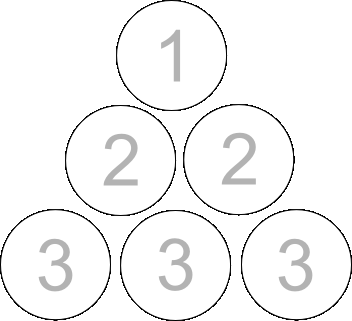
Each circle placed in the pyramid also has a size rating. There is no restriction on which size groups can be placed in which circles either based on tier or on Contacts rating. You can place an entire city as your tier 1 Contact even if you have only one rank in Contacts. This means you have a small amount of influence over a large group. As you will see below it will be very difficult to get those Contacts to do anything, but it will be big when you do.
The size ratings are as follows:
0: Individual Character
1: A unit or small family, from 4 to 20 individuals.
2: A village, small local company, department in a large company, or small prominent family.
3: A small town or large village, a small national company, or a large, prominent family.
4: A medium town, national organization, or regional religion
5: A small city, national corporation or national religious organization
When you make a Contacts roll, you choose a target Circle for the roll. The base difficulty for any overcome or create advantage roll related to this Circle is equal to the tier rank the Circle is in plus the Circle’s size rating.
Circle placement within the tiers are fluid as groups react to the character’s social standing.. Consequences from social stress can target the pyramid, thus removing the circle from the appropriate tier. A tier 3 circle can be removed by a mild consequence; a tier 2 circle can be removed by a moderate consequence; and a tier 1 circle by a severe consequence. The circle being targeted for removal depends on the social situation. For example, if you side with the Lightbringers over the Herites during a Rant you may find yourself in social conflict with the Herites as they try to discredit you. Having a Herite cell in your circles could mean that if you take a consequence, it would be Lost Respect of Fatima’s Blood Cell and you would have to remove that group from your circles. Once the consequence is cleared you may choose to fill the empty circle with a new group provided it can be justified. Circles can also be rearranged or replaced are during milestones.
Contacts
Contacts represent a web of separate but overlapping groups called circles (similar to circles in the Burning Wheel or even Google+). When you purchase ranks in Contacts you choose a number of circles and place them in a pyramid. The circle can be anywhere from an individual to an entire nation. Each tier of this pyramid has a rank, which corresponds to how close this particular circle is to you. The top tier is the group that you have the closest ties to. The middle tier is one degree removed and the last tier is one more degree removed. Any Contact outside of these circles is rated at a 4.Each circle placed in the pyramid also has a size rating. There is no restriction on which size groups can be placed in which circles either based on tier or on Contacts rating. You can place an entire city as your tier 1 Contact even if you have only one rank in Contacts. This means you have a small amount of influence over a large group. As you will see below it will be very difficult to get those Contacts to do anything, but it will be big when you do.
The size ratings are as follows:
0: Individual Character
1: A unit or small family, from 4 to 20 individuals.
2: A village, small local company, department in a large company, or small prominent family.
3: A small town or large village, a small national company, or a large, prominent family.
4: A medium town, national organization, or regional religion
5: A small city, national corporation or national religious organization
When you make a Contacts roll, you choose a target Circle for the roll. The base difficulty for any overcome or create advantage roll related to this Circle is equal to the tier rank the Circle is in plus the Circle’s size rating.
Circle placement within the tiers are fluid as groups react to the character’s social standing.. Consequences from social stress can target the pyramid, thus removing the circle from the appropriate tier. A tier 3 circle can be removed by a mild consequence; a tier 2 circle can be removed by a moderate consequence; and a tier 1 circle by a severe consequence. The circle being targeted for removal depends on the social situation. For example, if you side with the Lightbringers over the Herites during a Rant you may find yourself in social conflict with the Herites as they try to discredit you. Having a Herite cell in your circles could mean that if you take a consequence, it would be Lost Respect of Fatima’s Blood Cell and you would have to remove that group from your circles. Once the consequence is cleared you may choose to fill the empty circle with a new group provided it can be justified. Circles can also be rearranged or replaced are during milestones.
Monday, August 12, 2013
Latest Round Of Updates to Fate of Vimary
For all practical purposes, I'm calling Fate of Vimary done. There may still be some minor tweaks to various stunts depending on how things turn out in actual play, but I've made all of the major revisions I can think of. The largest is the use of conditions instead consequences, followed by some tightening up of how each of the magic systems work. Finally I've rearranged and prettied some things up. A revised character sheet is going to follow soonish, because I need to do some playtesting!
In case anyone doesn't have the link, here's the document in Google Drive:
Friday, August 9, 2013
Why Use Conditions?
First off, I like consequences a whole lot. And stress tracks. They're hands down one of my favorite "damage mechanics" of any game. In fact, I like stress tracks so much that whenever there's a need to track timing, or pacing, or progress of some kind my first instinct is to use a stress track. This leads to "stress track creep." In my original Strands of Fate conversion for Tribe 8, I had a whole bunch of them - I think five for characters and at least a couple other setting-level tracks. When I started working on a Fate Core version of Tribe 8, I said I wasn't going to add any more - and I still did. It bugged me because I had tried to take a reductionist perspective to breaking out various elements I thought should be in Fate of Vimary, but I couldn't shake myself out of the mindset that I needed physical, mental, social, spiritual, etc. stress tracks.

Reading about conditions in the Fate System Toolkit made a light go on in my head, but I wanted to sit on them a bit. I didn't want to use them just because they were new or different. Having moved recently, I had a (forced) break from the Fate of Vimary material and only recently was able to come back around to looking things over. When I did I realized that conditions were what I needed and a number of things struck me about them.
First is that a set of carefully defined conditions could be just as flexible as naming consequences on the fly yet still go a long way toward communicating a specific feel. In fact, in the long term I figured most consequences representing the same general concept would wind up looking pretty similar. So why not just name them ahead of time? The exact details after that are just window dressing. Second, in a game where stress was coming from a larger number of sources, with as many stress tracks as I had it would lead to consequences being in play less and not more (by virtue of having more stress boxes that needed to be checked off). I know I want some kind of minor consequences - or in this case fleeting conditions - in play the majority of the time.
As a result I started looking at what a conditions list might look like for Fate of Vimary. I wanted the names and the balance between fleeting, sticky and lasting conditions to be just right. I'm very happy with the end result. On top of that, I've become aware of just how much is going on in what seems like a simplified concept. For one, the broad nature of how they are named - Exhausted, Disoriented, Bloodied, Broken, etc. - are suitable for a variety of stress. You can be mentally or spiritually exhausted, or emotionally broken, or socially bruised. Having the conditions has also streamlined the process of revising some of the Synthesis stunts I had adapted. Granted all of this is possible using consequences, but conditions tighten things up quite a bit.
For most Fate Core games I'd use off-the-shelf stress tracks and consequences. But for something a bit more targeted, like Tribe 8, conditions are a great way to tweak the tone of the setting without straying too far spiritually from the core rules.
Thursday, August 8, 2013
Conditions in Fate of Vimary
Conditions are an alternate way of handling stress, introduced in the Fate System Toolkit.
Each condition can be thought of as a pre-defined consequence. Players can choose to soak stress by taking a condition, and the GM can impose a condition if it would make sense from a narrative standpoint. The GM may call for a roll to resist the condition when appropriate. Conditions are treated like aspects and can be invoked and compelled normally.
Conditions are either fleeting, sticky or lasting. Fleeting conditions last until you get a spare chance to recover from them - typically not longer than a scene. Sticky conditions require that an action or event take place to clear them. For example, if your character is dehydrated they need water, or if they are exhausted they need sleep. Lasting conditions require an overcome roll of Great(+4) passive opposition to begin to recover from them.
When you take a condition, you check off the box next to it. Once the box is checked, you can no longer take that condition. For lasting conditions, there are two check marks next to it. When you take a lasting condition as a result of the GM saying you have that condition, you check off both boxes. When someone makes the recovery roll for the lasting condition, you erase the first check box. At the end of the next full session, you can erase the second check box. Characters may have stunts that add additional boxes or even new conditions. High skill levels, such as Physique, do not add more boxes for conditions - instead, they simply mean the character has a better chance of actively resisting a condition if the GM calls for it.

You can take conditions in order to “soak” stress. Fleeting conditions are worth 1 stress and sticky conditions or each box of a lasting condition are worth 2. Note that if you check off one box of a lasting condition to soak stress, that box still will not clear until the end of the next session.
There is one last level of conditions: permanent. Permanent conditions are like extreme consequences in Fate Core. You can soak up to 6 stress when you choose to take a permanent condition. When you check off the box, you must replace one aspect (with the exception of your High Concept) with an aspect that represents the permanent condition. There is no recovery roll for a permanent condition, although at your next major milestone you can rename the aspect to represent some recovery from the condition. At that point you can erase the check box next to the permanent condition.
Here are the conditions that I have settled on for Fate of Vimary:
Winded [Fleeting] ☐Bruised [Fleeting] ☐
Disoriented [Fleeting] ☐
Frightened [Fleeting] ☐
Exhausted [Sticky] ☐
Famished [Sticky] ☐
Dehydrated [Sticky] ☐
Injured [Lasting] ☐ ☐
Crippled [Permanent] ☐
Wednesday, August 7, 2013
On Occasion, People Truly Amaze Me
I don't make many non-gaming related posts. Tonight is one of those times.
Marsha (or Marcia, I'm not sure), there isn't enough thanks in the world for what you did tonight in the grocery store. I had taken my step-daughter to Ralphs to go shopping, the first real grocery trip we'd made since moving into our new place. We had intentionally not gone shopping before moving, and after moving we were waiting until a new stove the landlord bought was delivered. It was finally installed yesterday, so this evening we went out for groceries. It was a really big shopping trip - the cart was overfull and near the end getting harder to push. When I got up to the register, my debit card wouldn't authorize. Over $330 in groceries, no checkbook, and the only card that I could use wouldn't work when it should have.
Completely taken off guard, I asked the checker to suspend the order so I could figure out what was going on and he could get on with ringing the people up behind me in line. At the very least I would have called my girlfriend so she could come pay for it.
Marsha, who was behind me in line, offered to pay our bill. I was shocked. I insisted that we didn't need someone to pay for it, I just needed to figure out why my card wasn't being authorized. She insisted, firmly, and clearly was not going to take no for an answer. She told me simply to "pay it forward". I couldn't thank her enough, and after we had loaded the groceries into the car and driven away I felt like crying.
I did not get her number, or her email address. She was not concerned in any way with being paid back. But Marsha, on the odd chance that you stumble upon this little corner of the Internet, I want you to know that what you did tonight was the pinnacle of what it means to be a human being. I'm not going to lie - after moving, having to buy new furniture and a host of other expenses things were going to be tight this month. Your generosity helped us out tremendously, and I have every intention of paying it forward.
Friday, August 2, 2013
Review: Fractured Kingdom
A few months ago, T. Dave Silva of House Dok Productions contacted me about writing a review of the Fractured Kingdom rpg. It had been mentioned in an RPG.net thread about rpgs that involve dreams and sounded really interesting. I finally was able to get around to reading it, and here's my review based on the read through. I haven't yet had a chance to play the game but I'm going to probably be rectifying that situation when I get a chance.
Overview
Fractured Kingdom is a horror/conspiracy roleplaying game set in the year 2202. A lot of knowledge was lost during the Great War and through the actions of a religious movement called the Church of the Reclaimer that gained a lot of power during the war. The war created large wastelands and forced large populations into huge megalopolises. The geopolitical landscape has changed as well, allowing the rise of mega corporations. For the average person, the world is filled with technology that just works without any real understanding of how or why. Even the most meager of apartments is basically a smart home, with an entertainment system, Internet access and appliances know when your food will spoil or you're out of toilet paper.
Through all of this a small number of people known as Lucids have become infused with supernatural power. They become Elucidated after some traumatic or important event causes them to travel to one of the four Outer Realms (the Dark, the Grave, the Slumber or the Verdant). Each Realm grants abilities that go along with that Realm's theme. There's a large dose of "secret world"-style conspiracy and mystery in the setting, as the player characters try to survive against other Lucids and the governments and corporations that want to use them for their own ends. Overall, the setting has a somewhat noir feeling, and harkens back to games like Kult or The Whispering Vault.
Presentation, Writing & Art
I read the PDF version, which I assume is not much different from the print edition. The PDF is bookmarked but doesn't have hyperlinks. It is black and white with sidebars, and doesn't make use of annoying watermarks or obtrusive borders. For the most part the book is well-organized with a table of contents, glossary and reasonably complete index. The book is divided into five chapters with a few narrative pieces in between, as well as an introductory adventure.
The book is well written, with only a few grammatical errors and odd turns of phrase. These errors become more evident in chapter five, which gives additional background information on running Fractured Kingdom. The art is reasonably well done, and reminds me somewhat of Ghislaine Barbe's art or perhaps some of the artwork from earlier White Wolf books. It definitely carries a kind of 90s feel to it for me and builds on the noir/horror feeling of the setting without detracting from the text.
Character Creation System
Characters in Fractured Kingdom are defined by groups of related characteristics. The base characteristics are ten Attribute "Trees", covering your standard attributes like Dexterity, Sense, Constitution, Mental, etc. From there, characters can also invest points in Skills, Abilities, and Boons. Skills and Abilities both have a parent Attribute Tree. Basically, Skills are focused applications of an Attribute, while Abilities are more ambiguous things that a character can do, ranging from Martial Arts styles to other things that might be considered "advantages" in other systems. Skills can also have Specialties and Abilities can have a Focus. Each Lucid additionally has a Realm that they have affinity with, which defines the kinds of supernatural abilities they can purchase. All characteristics that have a value range from 1 to 24 (or higher).
Characteristics are bought with points, with a separate pool of Characteristic Points for each Tree that are used for purchasing Attributes, Skills and Abilities under that Tree. In addition, Lucids have a pool of Lucid points that can be used to purchase abilities or boons that are supernatural in nature or tied to the character's Realm. Finally, starting characters get Experience Points that can be traded in for Characteristic or Lucid Points, or can be spent to buy bonuses or other effects in game. The number of points given for each pool depends on the experience level that is chosen for the game (New Lucid, Expert or Veteran). Characters also start with a couple of background skills and a pair each of basic Lucid Abilities and Foci to round them out. Finally, characters can take Drawbacks which give them some extra Experience Points to spend.
Boons are what make the game shine for Lucids. Each Boon is either Mundane, Supernatural, or tied to one of the four Outer Realms. They give each of the Realms a specific feel. Luckily there is a section on Boon Chains, which are lists of related Boons so a player can just pick one of the chains, buy up some required Boons, and go.
There are a lot of moving parts in character creation (which the game freely admits), and the setup allows for a wide variety of character types from very narrow and focused to more broad and generalized. The example characters range from a sword god to a close combat character to a kindly-seeming elderly woman who can extend an aura of terror. When I sat down to create a sample character things started to fall into place pretty quickly, but I wound up setting up a spreadsheet to track point totals. It still took maybe an hour and a half with spending points and tweaking things out. I can see how it would be possible to nerf a character concept and wind up with characteristics that don't quite work as the player intended. Luckily, the characteristics don't have a lot of side-effecting mechanics (unlike, say, Charms in Exalted where every Charm is a rules-exception). Every characteristic is on the same scale and uses the same rules, perhaps with the exception of Boons - and even they aren't very complicated.
System
The system is pretty simple and satisfies my, "Can I remember how it works without looking it up?" test. Basically, when attempting a task the player chooses or makes the case for the characteristics that would impact the roll. The ratings for all of those characteristics are added up. Then the player rolls a base d6, plus one more for each type of characteristic that applies (Attribute, Skill, Specialty, Ability, Focus). The result is summed and the rating total added, and that result is compared to a difficulty number.
One interesting thing is there are no "botch" mechanics, and critical successes are either a function of Specialties or Foci, or bought with Experience Points. Besides buying the possibility of critical successes, characters can spend experience points on rolls to get bonuses, double the value of rolls, and recuperate or recover energy.
So what is going to stop a character from trying to open a can of peas using five Characteristics? Well, if he's in the comfort of his own home, nothing. If he's doing it while fighting off nightmare monsters, he has to spend Energy. An average Expert Lucid seems to have about 100 to 110 points in their Energy Pool. Every time you do something in a stressful situation, you have to spend 1 point per characteristic used on the roll.. This doesn't work like the dice - if you are using two Skills for a roll, you are paying 2 Energy even if you only get one extra die on the roll. Boons have Energy costs as well.
I have my doubts about the result ranges involved in the dice rolls. It seems like under a lot of circumstances the base number from summing the characteristics is going to be high - at least over the median result for the die roll (the example in the book has a character rolling 6d6+54). When I see this kind of setup I always think, "If the values were reduced and the die roll scaled down, wouldn't it have the same result spread?". In a way it's the opposite of what we've been conditioned to look for in die rolls, where we expect the bonus to be some fraction of what the highest possible roll. I'd honestly have to play a few sessions to suss out how smoothly it works.
Combat is resolved by rolling attack versus defense. Weapons have a Weapon Rating which is added to the roll, while Armor has an Armor Rating that is added to the defense. The amount of damage done is equal to 2 points for each Characteristic used in the attack, plus the weapon's Strength rating. Armor has a Strength rating that reduces the damage done. Depending on the type of damage done (Health or Ego) it is subtracted from the appropriate Life Pool. Attacks that do a significant amount of damage result in Wounds, which are represented by placing a checkmark next to an attribute (again, depending on the type of damage). The part I like is that whenever the character uses a characteristic from a Tree that is wounded, they suffer additional Ego damage. Suffering too many Wounds results in more serious injuries (called Limitations). Eventually, the character will start dying. The system avoids a "death spiral" while at the same time penalizing the character in an abstract way. There are a number of attack and defense maneuvers that can affect rolls and actions, and they seem to cover most of the basics - aiming, all out attacks or defenses, etc.
Setting
The setting chapter covers the basics of the world of 2202, including the history of The Great War, the current geopolitical landscape, and the cities that have the highest concentration of Lucids. It also goes into the Baronies, groups of Lucids that can be antagonists or protagonists, as well as supernatural creatures and a more mundane bestiary.
The setting itself does not have a lot of detail. To me this is a good thing, because in the end Fractured Kingdom could work with nearly any modern setting with very little fuss. One thing that the section lacks is any hard details on the Bridges which allow crossing from the mundane world to the Realms. It's known that they cause problems with the local environment, but otherwise aren't detailed in terms of the system. Do they provide bonuses when using Realm abilities near them? Are they merely gateways to the Realms and nothing else? Obviously the GM can fill in those blanks, but it would have been nice if they got a more detailed treatment.
The introductory scenario, Song of Silence, includes write-ups for the characters who are introduced throughout the rulebook. They are a good mix of different Lucid abilities and are good for getting a feel for what Lucid characters should look like. Without giving away any spoilers, the scenario is a good introduction to the elements of the setting and has a mix of combat and noncombat options.
Miscellany
Support for "Mundane" characters is present, but they have limitations when compared to Lucids who simply tend to be tougher, more capable and have all kinds of nifty powers. Playing a Mundane among a group of Lucids would get boring pretty fast.
A gear chapter rounds out the book, covering basic equipment, weapons, and armor. The game uses Purchase Values in lieu of currency, representing how difficult an item is to obtain. The Fortune Attribute governs how much purchasing power a character has, and there are other characteristics such as Wealth that can add to rolls when trying to obtain an item.
Summary
Could This Ruling Affect RPGs?
Yesterday, the Ninth Circuit ruled that the EA video game NCAA Football did not qualify for First Amendment protection in its use of a character portraying football player Sam Keller. EA used all but his face and name - jersey number, position, and a biography similar to his. But nothing else. The ruling came after Keller sued EA, claiming that the game infringed on his "right to publicity" - basically, his right to control the use of his likeness or identity. The EFF article has a lot of the details, such as what test the Ninth Circuit applied to reach this ruling and how it differs from other similar, but not identical, recent rulings. It also quotes the dissenting judge in the case, Sidney Thomas:
Now this isn't to say that a lawsuit might be brought against a roleplaying company for including, say, a 15-year older version of some celebrity. The ruling is relatively narrow. But it opens the door for all kinds of legal shenanigans instigated by some celeb who gets it stuck in their craw that they don't like how they were depicted in a roleplaying game. Considering that roleplaying games straddle a nebulous zone between game and fiction, an unfavorable ruling in such a case could set a further dangerous precedent.
The logical consequence of the majority view is that all realistic depictions of actual persons, no matter how incidental, are protected by a state law right of publicity regardless of the creative context. This logic jeopardizes the creative use of historic figures in motion pictures, books, and sound recordings.And, by extension, role-playing games - which are likely to fall under the same likeness test used in the EA case. In both a football video game and a tabletop rpg, you can actively play the character. Or, to split hairs, in the video game you can control the virtual playing piece representing the character. In a TTRPG, you can actually play the character. Direct his actions, assign motivation and purpose, and otherwise try to realistically simulate the character in question.
Now this isn't to say that a lawsuit might be brought against a roleplaying company for including, say, a 15-year older version of some celebrity. The ruling is relatively narrow. But it opens the door for all kinds of legal shenanigans instigated by some celeb who gets it stuck in their craw that they don't like how they were depicted in a roleplaying game. Considering that roleplaying games straddle a nebulous zone between game and fiction, an unfavorable ruling in such a case could set a further dangerous precedent.
Wednesday, July 24, 2013
Revisiting Dixton
Aside from getting a Tribe 8 game going, I have two other things I want to expand on. The first is the setting that I started writing for the #ADX anthology. I had a lot of stuff I chopped out to try to get it down to a reasonable word count, but I'm simply not sure what I want to do with it - just put it out there for my own satisfaction, try to publish it, Kickstart it, I'm completely not sure.
The second was my Dixton setting. It start out as a kind of Thief/Dishonored homage, but it's settled in my brain worms a bit, and I feel that I want to to shift slightly in theme and tone. Watching shows like Revolution and Defiance have kind of inspired me toward an even more Civil War-era, pseudo pre-Antebellum Southern feel.
That means going more into themes of class division and privilege. I don't want it to be a social commentary or anything like that, but I've never really dealt with this kind of thing in any depth. I definitely don't want to fall into any traps or cliched stereotypes...I want to handle the problematic subject matter well. I'm assuming that's going to mean a bit of primary source research, particularly the history of slavery in the British Empire because that is a closer analog to the dominant society in the setting. I'm definitely open to suggestions as to where to start.
The setting currently has one non-human race, the Sia, who are native to the continent where the setting is focused. They were enslaved and then set free. I think I want to move their magic toward something more animistic and visceral, involving blood and pain, but not fall into a, "It's just like voodoo or Santeria" trap. Things like The Heart from Dishonored would fit right in.
The emphasis will still be on the characters being part of the seedy underworld, as thieves and assassins and fences and crime lords. But there's going to be some social upheaval in the works. I want Dixton to be a powderkeg, and I think the PCs should be the fuse.
Tuesday, July 23, 2013
I'm going out on a limb here
There's been a lot going around about +Indie+'s interview with +James Desborough. As a privileged, middle class, white male of a certain age (too young to be old, too old to be young) I've only started to seriously consider and think about issues regarding diversity, sexism and even racism in the past couple of years. And I consider myself a progressive, inclusive person.
As a relative newcomer/outsider to these debates I went back and looked at the history between Desborough and - well, the Internet. I got a good start with this blog post by Jon Kim. After looking over his links I came to much the same conclusion as Jon did (at least regarding the controversy he was writing about). Then I brought myself current on the Indie+ interview and the current responses.
I'm going to go out on a limb here and say that I feel Desborough's perspective is reasonable to a degree, consistent and he is very articulate. I don't agree with everything he has to say. I think coming from the position of having been the subject of a lot of vitriol, his experience is relevant and important to understand. I feel there is a portion of his body of work that is in bad taste, and might be offensive to some (particularly women). I do agree with him in that individuals are responsible for the harassment that occurs at conventions. I've seen it first hand. I don't agree that it is only the individuals - there is definitely a "culture" that at some level tolerates odious behavior among its members. Hell, 20 years ago I went with a large mixed gender group to Gateway in L.A. We came up with our own safety guidelines for the women (some of whom were not yet 18) in the group because we were already aware of how women were treated at cons. I would like to assume it has gotten better since then, for whatever measure of "better". I disagree that harassment policies are not needed. Just like the argument, "Nobody needs a firearm, they can just call the police" is ridiculous, the contention that there is no need for a policy because of the ability to call law enforcement is ridiculous for the same reason. I do agree that any policy needs to be vetted and carefully constructed in order to prevent abuse. I apologize if any of this disappoints any of a number of people whom I respect that take opposing viewpoints.
But where I'm going to start to lose respect for people, and one of the reasons for this post, is that the level of vitriol, mischaracterization, outright twisting of words and blatant disrespect I've seen - present and past -is shameful. It's on both sides, typically not the principals at the center of the debates, but I see a lot more of it from people who are "anti-Desborough" than pro. It's disheartening to say the least.
That's pretty much all I have to say on the matter. Any further discussion is, as always, welcome in the comments.
Wednesday, July 10, 2013
The Dream Quest
Editor's Note: This is a piece from the original Rusted Sky website, and the original author was not credited. If any of my Google+ peeps (of which I know there are a few from the Tribe 8 olden days) recognize it as theirs or somebody else's, simply drop me a line and I will put the credit in.
I feel the energies of my soul open in petals, forever unfolding to reveal the source of all creation. The sound of my own voice becomes more distant with each breath, removing the binds of consciousness and thus allowing the River of Dream to take hold. A warm, almost burning sensation ascends my spine, coming forth from the lowest of my spiritual centers, passing each nexus, awakening its potential. The warmth finally reaches my head and the world vanishes from me.
I am floating amid a thousand butterflies, their wings carrying my weight among the mists and clouds of the River of Dream. I feel alive, closer to the Goddess than I ever was during my time among the Tribes. Among Magdalen the Lover. She had taught me how to love and appreciate the sensations that existence had to offer, and I learned to appreciate her teachings and her embrace. I sought to understand the inner nature of desire and found what I was looking for. I found true peace in the love of the Goddess. Magdalen’s jealousy was complete. I felt the wrath of her vanity and was banished from ever knowing another touch or caress from her pleasurable lips. I would never again know the comfort of numerous bodies, keeping me warm at night and lending to me the sensations of the flesh. I was an exile when I made the true discovery, and the subsequent banishment held no pain for me. I realized then, that the pain was during my time among the Tribes. I was truly liberated.
So here I am, floating as a Lightbringer in the River of Dream. Searching for the spirit that will guide us and aid us through the hardships to come. The sweet fragrance of the butterflies calms my senses as I project my mind into the ether. Droplets of rain fall upon my face, cleansing my pristine, naked form, taking me further across the fold into the depths of the spirit realm. Magnificent colors, brighter than a rainbow in a clear sky, shine and dance in a harmonious nature. They soon take form, creating a brilliant landscape of emerald green trees, alabaster white trails, and waterfalls that resemble an angel’s tears. I weep at the beauty of it all, knowing that with guidance and hope, all of this can become our reality. If only we allow ourselves to dream.
The butterflies gently place me upon the path of the magical forest, my feet light and weightless upon the ground. I laugh out loud despite myself, willing to give myself to my surroundings without fear or hesitation. My movements are enchanting, like a swan about to take flight. The trail carries me along, a breeze of lavender kissing my face. I notice deep red stones, like well placed droplets of blood, standing out in contrast to the placid white shales of the path. I know I am getting closer now. My power as a Dreamer are strong and I have done much in the way of knowing my destination. I am careful not to disturb the rubies, leaving them in their slumber; untouched by my imperfections.
I am led to a grove that is alive with the activity of forest creatures. Insects gathering nectar and pollinating everything they touch. Birds dancing in the circling ripples of air, allowing their wings to whimsically carry their bodies. The grass flows like the currents of the tide, swaying and lapping against the roots of the trees. Flowers blossom, releasing their seductive perfumes into the air, erotically mingling with the scents of the grove. I dance and spin into the circle, reenacting the ritual I had practiced so often before. The spirit can not resist a dance of purity, for that is what it is. What it represents.
My motions are without resistance, one flowing into the next, never giving any signs as to when one ends and the next begins. Pure dream essence falls from my body, forming tiny eddies of fairy mist in my wake. The silent music flutters beside me like a partner in dance, always keeping in time and rhythm. I am not alone now. She is with me, in all her grace and elegance. I begin my chant, my voice as sweet and luring as the ripest fruit.
Song of love,
Dream of purity,
Dance with your child,
O’ Spirit of wild.
Come with your hope,
I sacrifice all I am,
Unto you Destiny lies,
O’ Spirit of wise.
Carry our young,
Promise to a greater land,
Within your soul,
O’ Spirit of old.
I continue to repeat the song, rising into an epiphany that pervades all the senses. Body, mind, and spirit become one. My dance spins, continually faster and faster, until I feel a sensation enter the grove. It worked! It has arrived! I stop.
Tears well up within me, pouring forth of their own volition. My knees shake and give way, my body collapsing to the grass in its presence. Emotion overcomes me and I lose myself in its beauty. Word cannot lend justice to the spirit that stands before me. It is proud yet humble. Its starlike eyes pierce me with mercy. It steps further into the grove, red droplets of rubies left in its path. A faultless, brilliant white horn rises from its pristine head, touching the stars of the sky with its purpose. In all my life, I have never witnessed such an enchanting beast.
It comes towards me, calm and gentle, reaching for my bosom with its horn. The touch of its magic is like all the pleasures of the world, without sin or shadow, passing through me in an instant. I see the visions of its past. How it was hunted and forgotten. How its brethren were tainted an turned into creatures of darkness. They are horrible visions filled with pain and longing that only makes it all the more beautiful. I promise it that we will never forget.. That we will always worship it for what it is. That we will respect it and hold it sacred as our totem spirit. I feel its love for me when I pledge myself to it, and know then, that it will never be far from me.
I sleep in the grove, truly knowing peace. When I awake, I see that a ruby the color of blood has been placed in my palm, my fingers holding it tightly. My fellow lightbringers come around me, asking me what my DreamQuest has foretold. What secrets it has garnered for the Fallen, the Eighth Tribe. I smile at them, feeling the warmth of the gem in my hand.
“Come, let us go.” I say. “There is much work to be done. We have a Tribe to save.”
Tuesday, July 9, 2013
Travel, Fate Core Style - Part 2
In Part I, I covered a few of the basic ways that travel can be handled. In this second installment I'll give some examples of slightly specific Extras that can be used to add more detail to or just spice it up a little bit. These can either be used by themselves or possibly combined together, depending on the game's exat needs.
An enhancement to this idea is to have specific boxes on the stress track represent locations that can be reached. In order to reach the location, the characters need to mark off stress equal to or greater than the location's box. If a location is very difficult to find, unknown to the characters, or hidden, you can require that the characters have to land on that exact box.
Combining multiple Extras together can result in what amounts to a write-up of a campaign region. Each Zone would have aspects, a distance stress track with defined Consequences, and a skill or two (for generic zones Terrain or Weather and Threat are good choices for skills). Over time, the aspects and skill ranks for the zone can even change as campaign milestones are reached.
Each box on the distance stress track represents 1 mile travelled (Vimary is a pretty small place), and rolls are made every hour of game time. Characters roll Physique to mark off distance stress, opposed by the Terrain skill. Consequences are used to absorb shifts the characters generate, slowing them down and placing
Deadly Rust Storms
Artifacts of the World Before
Olympus
Access to Subterra
Skills:
Toxic Environment +4
Terrain +4
Distance:
Aspects
Aspects are the easiest and most obvious additions to any scene involving travel, from Impassible Mountains to Plentiful Game to Trade Winds. Since the scale is much larger than most scenes, it's also possible for specific locations to be their own aspects. These location aspects can be used much like situation aspects. For example, a player can invoke the Greenbriar Village aspect to get a Lore bonus on finding the ruined tower or for a hot meal to help make a recovery roll.Zones
Zones are another relatively simple addition to travel. Geographic areas tend to have natural barriers or boundaries - rivers, mountains, forests, marshes, etc. These boundaries can provide passive resistance to moving between zones, prompting appropriate rolls if one or more zones need to be crossed within the same scene. Similarly, they can be used to keep track of the pace of travel. Zones will likely have their own aspects. Locations can also be smaller zones with aspects of their own.Distance Stress Track
Speaking of pacing, using a distance stress track is one technique for keeping track of how far the characters get and how fast.The stress track has a number of boxes each representing some unit of distance. As the group travels, they make appropriate rolls (Drive, Physique, Athletics, whatever). Each roll takes place at a specific time increment - the more shifts the characters accumulate, the faster they travel. Most of the time the resistance to the roll will be passive, but it might be active under the right circumstances (which we'll get into more in a bit). This stress track would likely be one that is "attacked" with straight shifts - two shifts means mark off two boxes. When the track is filled, the characters reach their destination.An enhancement to this idea is to have specific boxes on the stress track represent locations that can be reached. In order to reach the location, the characters need to mark off stress equal to or greater than the location's box. If a location is very difficult to find, unknown to the characters, or hidden, you can require that the characters have to land on that exact box.
Consequences
It's also possible to the distance stress track one or more Consequence slots. These Consequences should be predefined, and are there for the GM to "absorb" shifts and thus slow down or complicate the journey. Good examples are Bridge Out, Roadblock, or even Flight Delayed.Skills
Once you get to this level, you're pretty much going full Fate Fractal. The most obvious choice for a skill would be any situation where the environment can actively take action against the characters. A Winter Storm might be a skill used to attack characters travelling through a mountainous region. A more abstract skill could be Treacherous Terrain that can interfere with how far the characters travel in a scene - effectively meaning that the terrain is offering active resistance to the characters trying to mark off distance stress, if it's being used. Aspects can still be used to for specific threats - like Wolf Packs or Bandits.Combining multiple Extras together can result in what amounts to a write-up of a campaign region. Each Zone would have aspects, a distance stress track with defined Consequences, and a skill or two (for generic zones Terrain or Weather and Threat are good choices for skills). Over time, the aspects and skill ranks for the zone can even change as campaign milestones are reached.
Example
Here is an example "campaign scale" zone from Tribe 8. The options in use are:- Zones
- High concept, trouble and several other aspects Distance stress track with Consequences.
- Two skills: Toxic Environment and Terrain.
Each box on the distance stress track represents 1 mile travelled (Vimary is a pretty small place), and rolls are made every hour of game time. Characters roll Physique to mark off distance stress, opposed by the Terrain skill. Consequences are used to absorb shifts the characters generate, slowing them down and placing
The Rust Wastes
Aspects:
Disintegrating Industrial AreaDeadly Rust Storms
Artifacts of the World Before
Olympus
Access to Subterra
Skills:
Toxic Environment +4
Terrain +4
Distance:
OOOOOOOO
Consequences:
Keeper Pitfalls (-2)
Collapsing Ruins (-4)
Thursday, July 4, 2013
Travel, Fate Core Style - Part I
Travel has been a staple of roleplaying games for a very long time. A lot of gamers who cut their teeth on BECMI or similar have fond memories of exploring wilderness hex-maps, figuring out travel times, and resolving random encounters. I don't know about anybody else's groups, but in ours the wilderness expeditions were often a large part of the adventure before getting to the dungeon/lost temple/whatever.
What often got lost in those heady early days was the reason for travelling in the first place, as we quickly set about figuring out travel times, setting up watch schedules and rolling for random encounters. It became a task we did by rote, like calculating encumbrance or tallying gold pieces. It wasn't necessarily the wrong way to handle travel, but there wasn't a lot of support for other alternatives either.
Travel As A Challenge
As anyone who has ever set up even the most benign-seeming trips can attest, they can quickly turn into a nightmare. These situations mean a single Overcome action won't cut it, because covering the distance from point A to point B isn't the real challenge - it's everything else that's complicating the trip.
Let's say the PCs need to get halfway around the world to some location to obtain some McGuffin. They need to do it without tipping the bad guys off as to where they are going, and they can't arouse suspicion once they get there. Finally, they have to use two forms of travel - say fly into the country and then arrange for a car or boat or something to get them there. The GM breaks the challenge down to:
- A Resources roll to get transportation.
- A Deceive roll to throw the bad guys off of their trail.
- A Contacts roll to get hooked up with the proper documentation.
- A Drive roll to successfully get to the final destination.
The same steps can be applied to typical fantasy wilderness travel: the characters have to endure the rigors of trip (Physique), properly navigate (Lore), avoid danger (Notice) and possibly even be able to find food, water and shelter (Resources or possibly even a second Lore roll). In this case, the rolls have more to do with the actual travel than the preparations, but it's the same general idea: the outcome or the purpose of the travel is more important than how the characters got there.
Travel As A Contest
This one should be pretty self-evident: the travel is a race. It's essentially not much different than when two characters are both rushing for the same sword, or the same door, or to get to King first to rat out the other character. The exact method they are using isn't nearly as important as the overall goal of the race and the potential complications for failing the contest. Many times each leg of the contest will look a lot like on of the steps in a travel challenge. So in our Challenge example, let's say that there's a Nazi bad guy that is trying to get there first (I've been watching Zero Hour...stop judging me). He'd just be rolling indirectly against the PCs to see if he can get enough victories to win - by finding out where the PCs are going, trying to trip up their getting there, and finally getting there first.
Travel As A Conflict
Here's where things get interesting. How can travel be set up as a conflict? The best answer I can think of is, "When the trip is trying to hurt you." An easy example would be a storm threatening an ocean voyage. The storm might be given a skill that could be used to attack the boat. Exposure, dehydration, hunger, even distance are all things that can be used against the characters. In addition to resisting or defending against these elements, the characters may even have the ability to mitigate or otherwise eliminate the threat.
Other Techniques
The three methods above aren't the full extent of how the Fate Fractal can be leveraged to add some variety to travelling. In the next installment, I'll be going over some more specific implementations that make use of different rules elements.
Tuesday, June 18, 2013
Owning Your Shit (Yes...Again)
When someone swipes content from someone else - whether it be art, or an audio sample, or a paragraph, or a map, or even a very specific idea/implementation - most people's initial intent in pointing out the source is not to try to serve as tattletales to the original IP owner. We know policing IP is the job of the creator. The purpose is to point out that something seems to be amiss. Much of the time the person in question is approached discreetly with a helpful tip. "Hey, I think you might have copied the Turd Monster from Toilets and Tourette's. You might want to do something about that." Sure, you get douchebags that will jump straight to shouting it from the rooftops but those are the same people that yelled, "Mom, Bobby's playing with himself again!" at the top of their lungs when they were kids.
It's when the other party denies it, gives excuses, acts like they don't care, etc. that people get pissy. That's when IP owners get notified, and angry blog posts are hammered out like Stephen J. Cannell at his typewriter. All too often, it turns into a complete clusterfuck because the person at the center of attention gets hot under the collar and somehow screws up. They might say something they regret, reveal how ill-informed they are about the situation at hand, or otherwise get people more riled up by doing things like threatening defamation lawsuits or claiming there is a conspiracy to steal their ideas. But all it does is getting everyone else even more pissed off.
I'm so mad I popped my collar
Sidebar: no shit regarding conspiracy claims. This has happened twice now in two different incidents. Trust me, if your stuff was that good, WotC/Onyx Path/whoever would hire you or buy it from you. They wouldn't steal it. Yes, that means your shit isn't even good enough to steal.
To the Lakims and Alleys of the world, there is only one solution and it's the same one that has been repeated over and over: OWN YOUR SHIT. If you fucked up and accidentally reproduced an entire chapter from someone's fanfic and there are people right there who know what they are talking about just fucking own up to it, fix it, move on and don't do it again. No excuse. No explanations. No arguments. No "But it's perfectly leeeeegallllll". Don't put "ego’s sociopathic cousin, hubris" (as Patton Oswalt put it) in charge. You're not going to win, ever.
Not because there are Internet mobs and we just have to live with it or because you're a horrible person. Just because you need to own your shit.
Saturday, June 15, 2013
A Little Late To The Party
There's been excellent coverage of this (and boosting of signal) by Bruce Heard, Tim Brannan, and even Tracy Hickman. You can read about it there but in short, Tracey Alley used a copied map of The Known World from Basic D&D in her books. She also used some artwork for book covers that may or may not be licensed, and one book cover by an artist that might have swiped Paizo's goblin mascot. Part of this has blown over as she has has removed her books from Amazon pending a scrub of the copied material (except she's still hocking her books on Twitter).
 |
| It takes a long time to update websites to remove other people's content, right Mykal? |
But there is one tiny, niggling thing. The same niggling thing we saw with Mykal Lakim. She keeps throwing up excuse after excuse that give the impression she's being forced to do all of this...but doesn't really understand just what the fuss is about. While she has gone on at length about not wanting her work besmirched by the moral and ethical implications, she makes it plain that she believes she had the right to use the map and just needs to go through the motions to placate people:
 |
| cf. the, "Nothing's illegal if you don't get caught" rationale |
 |
| This is the "I cannot distinguish between infringement and plagiarism" rationale |
And all of it was public domain anyway, like H.P. Lovecraft's early works, or Hercules.
 |
| Followed by the , "But Mom, everyone else is doing it!" defense |
Her arguments devolve quickly into a continuation of bizarre assertions about public domain, USGS maps, copyright on "articles" (which is apparently what adventure modules are) and how this is all just like that one movie that is no longer under public domain (and even if it were would still be protected in some respects).
 |
| This is the "Throw shit against the wall and see what sticks" argument |
And more backpedalling and armchair lawyering:
 |
| She was reliably informed by the same hobo Mykal Lakim talked to |
This makes it all right, right? What's the fuss? She was just working off some old notebooks. It's a totally common pose that artists use...I mean, that's a traced map of Europe. Who remembers things they roleplayed 20 years ago, anyway? It wasn't copyrighted anyway, right?
Anyone who is nodding along with the above and thinking, "Yeah, what's the deal? Even D&D stole a lot of things from a lot of places" needs to read Part 1 of this post by Patton Oswalt. I'll quote the best part, even though it's fucking Patton Oswalt so you should read it no matter what:
I’m never going to win this fight. There’s always going to be a portion of the population – maybe a majority, even – who think that The Actor, The Valedictorian and The Pastor did nothing wrong. That comedians really do get their jokes out of books. That anyone can be funny.
And that’s okay. There are almost 7 billion people on this soggy marble. I don’t need all of them on my side. The fans who unfollowed me on Twitter after I shut down The Pastor – just like the ones who unfollow me when I rage against the NRA, and gay marriage opponents and FOX News? I don’t want them as fans. As carefully as I’ve curated and cultivated my career, I’m now doing the same with my audience. Universality was never my goal as a comedian. Longevity and creativity are.
I’m a comedian. I get to care about this stuff.In the end, Tracey Alley doesn't deserve to be run out of town. She doesn't need to be insulted - although I have been rather blunt with her because I find her smoke screen of "I didn't do anything wrong leeeegalllllyyyy" to be tiring. She doesn't need to be threatened. She needs to do exactly what she's done. Apologize, even if I wish she didn't sound like one of my kids being forced to apologize to the other one but whatever. Pull her works everywhere in order to remove the plagiarised content and get on with her highly derivative writing.
And the people who are saying, "Well, TSR did this..." and "What about this Kickstarter that didn't deliver, why aren't people complaining about that" need to shut the fuck up. You aren't helping. In fact, you're just supporting a growing culture of people who feel they can appropriate whatever they want, because "They're not playing with it anymore!" All of you - every last one - know damn well where your ideas come from. The reverse is true - if some writing or art isn't yours, you know damn well it isn't, even if you don't know where it came from. This isn't rocket science, people. The prevailing attitude of, "I found it on the Internet/in my notes, so it must be okay to use it in my work and sell it!" doesn't help anybody. When it happens over and over again it takes food off of content creators' tables. It makes them less likely to share, and to be understanding with fans who not only pay homage to the creators they love with their own works but pay the respect and credit to the original creator that they deserve.
Friday, June 14, 2013
Mid-Year Retrospective
I started out this year with a few goals. The first was to get back into gaming. The second was to start blogging about gaming, because I felt I had things to say. Because of other things taking up my thoughts and time - looking for a new home and working on getting my son out here from Indiana - I think it's a good idea to kind of look at where I started from and where I'm likely to be going.
After backing the Fate Core Kickstarter in January I wanted to do a couple things. The first was my Tribe 8 conversion to Fate, which turned out really well. There are still a few things that I want to do to polish it up, and I haven't actually started a game like I wanted. I'm kind of glad though because the Fate System Toolkit just came out and I haven't had a chance to look at it in detail - but there seem to be things that I'm going to want to change.
I also started cooking up a Thief-inspired setting. I want to revisit it and flesh some things out, because I have some other ideas where to go with it. The same goes for the setting I pitched for Apotheosis Drive X. I left a lot out of what I had written, and for the time being it's just sitting in my Google Docs folder.
Speaking of ADX, one unexpected turn for me was finding way more Kickstarters that I was interested in than I expected. I kind of went overboard - Fate Core, ADX, the Spark RPG, two Fate Dice Kickstarters, Exalted and Mekton Zero. That's more game spending than I've done in a long time. I don't regret any of it, but in the upcoming months I need to curb that kind of spending.
Finally, I have some other things I wanted to do. I have a review I promised and I wanted to finish reading the Laundry RPG. There are bound to be other things that catch my interest as well, and I'm sure once I'm not so preoccupied with moving. Who knows, if my son decides to continue playing RPGs maybe I'll have a guest author on occasion.
Subscribe to:
Posts (Atom)